Category: mechanic Corona

  • 💧 Signs Your Vehicle May Have a Fluid Leak

    By 10 Degrees Automotive | Corona | 951.414.9423

    Automotive technician inspecting fluid leaking beneath a vehicle and comparing different automotive fluid colors

    A spot beneath your parked vehicle may seem harmless, but it can be an early warning of a developing mechanical problem. Your vehicle depends on several fluids to lubricate components, control temperature, create hydraulic pressure, clean surfaces, and transfer power.

    When one of those fluids escapes, its level may eventually fall low enough to cause poor performance, component damage, or a serious safety concern. Some leaks progress slowly, while others can become critical in a short period.

    Knowing the common signs of an automotive fluid leak can help you respond before a small drip becomes a breakdown or an expensive repair.

    If you notice fluid beneath your vehicle, an unusual odor, smoke, or a falling fluid level, call 10 Degrees Automotive in Corona at 951.414.9423 to schedule a professional inspection.

    🔍 A Puddle or Spot Beneath the Vehicle

    The most obvious sign of a fluid leak is a wet spot where the vehicle has been parked. Pay attention to its color, location, smell, consistency, and approximate size.

    Placing clean cardboard beneath the vehicle overnight may make a leak easier to observe. Do not crawl underneath a vehicle that is supported only by a jack, and avoid touching unidentified fluid with bare skin.

    Notice whether the spot appears:

    • Beneath the front of the vehicle
    • Near the center
    • Close to one of the wheels
    • Under the engine
    • Under the transmission
    • Near the fuel tank
    • After the air conditioner has been running
    • Only when the engine is hot
    • Immediately after driving

    The location provides a clue, but fluid can travel along covers, crossmembers, hoses, and other surfaces before reaching the ground. The puddle may not be directly beneath the actual source.

    💦 Clear Water May Be Normal

    Not every puddle indicates a repair problem.

    When your air conditioner operates, moisture from the air can condense on the evaporator and drain beneath the vehicle. This commonly produces a small puddle of clear, odorless water, especially on warm or humid days.

    Water may also drip from the exhaust during certain operating conditions.

    Normal condensation should not feel oily or have a strong chemical smell. If the fluid has color, a slippery texture, or an unusual odor, it should be investigated.

    When you are unsure whether a puddle is harmless water or an automotive fluid leak, a professional inspection can provide a clear answer.

    🛢️ Dark Brown or Black Fluid May Be Engine Oil

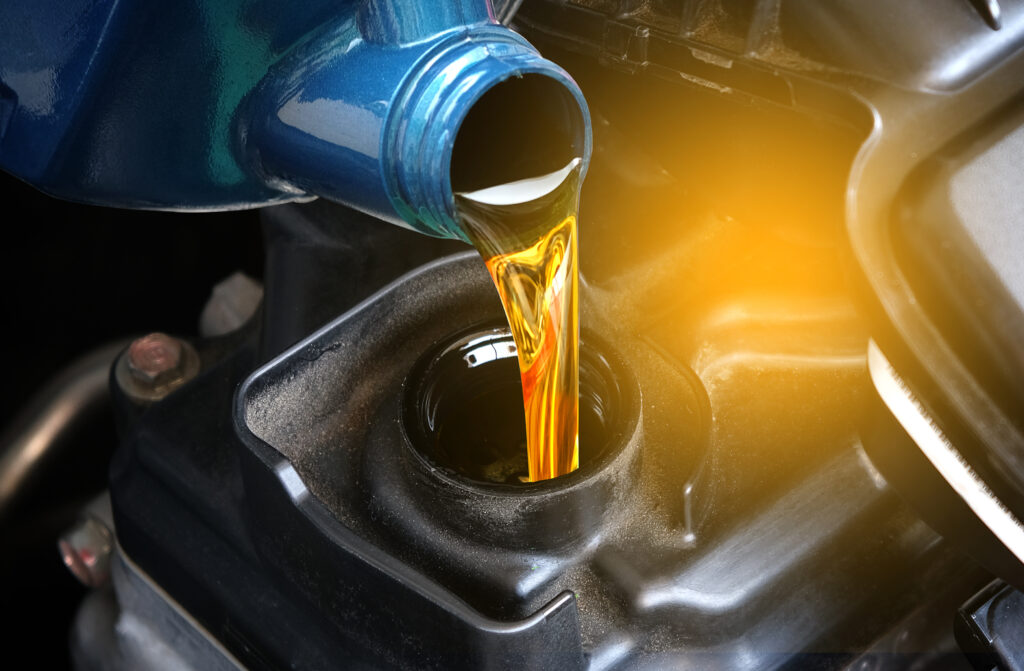
    Engine oil is commonly amber when new and becomes darker during normal use. A leak may appear light brown, dark brown, or nearly black depending on the oil’s age and condition.

    Possible engine-oil leak sources include:

    • Valve-cover gaskets
    • Oil-pan gaskets
    • Drain plugs
    • Oil filters or filter housings
    • Camshaft or crankshaft seals
    • Timing covers
    • Oil cooler lines
    • Turbocharger oil lines
    • Oil-pressure sensors

    Other signs of an engine oil leak may include:

    • A burning-oil smell
    • Smoke from the engine compartment
    • Oil residue on engine surfaces
    • A falling oil level
    • The need to add oil frequently
    • Oil spots after parking
    • An oil-pressure warning

    Oil can create smoke or a strong odor when it contacts a hot exhaust component. A leak may also damage rubber parts or leave residue that attracts dirt.

    Check the oil according to the instructions in your owner’s manual. If the oil-pressure light comes on, pull over safely and turn off the engine. Driving without adequate oil pressure can cause severe engine damage.

    🌡️ Green, Orange, Pink, Blue, or Yellow Fluid May Be Coolant

    Engine coolant is produced in several colors, including green, orange, yellow, pink, red, and blue. Color alone does not identify its type or confirm which formula belongs in your vehicle.

    Coolant may feel slippery and often has a sweet chemical odor. Keep it away from children and animals because it can be toxic.

    Common coolant-leak sources include:

    • Radiator hoses
    • Heater hoses
    • The radiator
    • The water pump
    • The thermostat housing
    • The coolant reservoir
    • Hose connections
    • Heater-core components
    • Engine gaskets

    Signs of a coolant leak may include:

    • A rising temperature gauge
    • Steam from beneath the hood
    • A sweet odor
    • Low coolant
    • Poor heater performance
    • Colored residue around a connection
    • A puddle near the front of the vehicle

    If the engine is overheating, pull over safely and shut it off. Never remove the radiator or pressurized coolant cap while the system is hot.

    Adding coolant may temporarily restore the level, but it does not repair the leak. Always use the coolant specification required by the vehicle manufacturer.

    ⚙️ Red, Pink, Brown, or Amber Fluid May Be Transmission Fluid

    Automatic transmission fluid is often red or pink when new, although its appearance may become darker with age. Some vehicles use other colors or fluid types, so visual identification is not always reliable.

    A transmission-fluid leak may originate from:

    • Transmission-pan seals
    • Cooler lines
    • Axle seals
    • Output-shaft seals
    • Electrical connectors
    • Drain or fill plugs
    • The transmission case
    • The transmission cooler

    Possible symptoms include:

    • Delayed engagement
    • Rough or slipping shifts
    • Fluid beneath the vehicle
    • A burning odor
    • Unusual transmission noise
    • A transmission warning
    • Reduced performance

    Some modern transmissions do not have an owner-accessible dipstick. Fluid level and condition may require a specific temperature, procedure, and equipment to check accurately.

    Operating a transmission with insufficient fluid can cause heat, poor lubrication, and internal damage. Schedule transmission leak repair before the fluid level becomes dangerously low.

    🛑 Clear, Amber, or Brown Fluid Near a Wheel May Be Brake Fluid

    Fresh brake fluid is usually clear to light amber and may darken with age and contamination. Because it can resemble other fluids, its location and effect on braking are especially important.

    Brake fluid may leak from:

    • Brake hoses
    • Metal brake lines
    • Calipers
    • Wheel cylinders
    • The master cylinder
    • ABS hydraulic components
    • Fittings and connections

    Possible warning signs include:

    • A soft or sinking brake pedal
    • Increased stopping distance
    • Low brake-fluid level
    • A red brake warning light
    • Fluid near a wheel
    • Fluid beneath the master cylinder
    • Reduced braking performance

    A suspected brake-fluid leak is an urgent safety concern. Do not continue driving if the pedal feels soft, sinks toward the floor, or the vehicle does not stop normally.

    Have the vehicle transported to a qualified repair facility for immediate inspection. Simply adding brake fluid does not repair a hydraulic leak.

    🔧 Power-Steering Fluid May Appear Red, Amber, or Brown

    Some vehicles use hydraulic power steering, while others use fully electric systems and have no power-steering fluid.

    Hydraulic power-steering fluid can vary in color depending on the system and fluid specification. A leak may appear red, amber, or brown.

    Possible leak sources include:

    • The power-steering pump
    • Pressure or return hoses
    • The steering rack
    • Seals
    • Reservoir connections
    • Fittings

    Symptoms may include:

    • A whining noise while turning
    • Increased steering effort
    • A low reservoir level
    • Foam in the reservoir
    • Fluid near the front of the vehicle
    • A burning smell
    • Steering-system warnings

    Driving with low fluid can damage the power-steering pump and reduce steering assistance. Use only the fluid specified for your vehicle, and have the source of the leak repaired.

    ⛽ A Gasoline Smell Requires Immediate Attention

    Fuel may evaporate before it creates a large puddle, so odor can be the first warning of a leak.

    Possible sources include:

    • Fuel lines
    • Injectors
    • Seals
    • The fuel tank
    • The filler neck
    • The fuel pump or pump seal
    • Evaporative-emissions components

    Signs of a potential fuel leak include:

    • A strong gasoline odor
    • Wetness beneath the fuel tank
    • Fuel odor near the engine
    • Poor fuel economy
    • Difficulty starting
    • A check engine light
    • Visible dripping

    Fuel is highly flammable. Do not smoke, create sparks, or continue driving if you suspect an active fuel leak.

    Turn off the vehicle in a safe location, move away from traffic and ignition sources, and arrange professional assistance.

    🧼 Windshield-Washer Fluid May Be Blue or Another Bright Color

    Windshield-washer fluid is often blue, although other colors are available. A leak may appear near the front of the vehicle and may be accompanied by poor washer operation.

    Common causes include:

    • A cracked reservoir
    • A disconnected hose
    • A damaged washer pump
    • A leaking connector
    • Freeze or impact damage

    A washer-fluid leak is not typically as mechanically urgent as an oil, coolant, fuel, transmission, or brake-fluid leak. However, clear visibility is essential, and leaking fluid should still be repaired.

    Do not assume that every blue puddle is washer fluid because some coolants are also blue.

    👃 Unusual Odors Can Reveal a Leak

    A fluid does not need to reach the ground to create symptoms. It may leak onto a hot component and burn or collect inside a protective cover.

    Pay attention to odors such as:

    • Sweet chemical smells from coolant
    • Burnt-oil odors
    • Strong gasoline fumes
    • Acrid transmission-fluid odors
    • Hot brake smells
    • Washer-fluid odors inside the vehicle

    An odor inside the passenger compartment can indicate that fluid or vapor is entering the ventilation system. Coolant inside the cabin may be connected to heater-core trouble and may also cause a greasy windshield film or damp carpeting.

    Strong fuel, smoke, or burning odors require immediate attention.

    🌫️ Smoke or Steam From Under the Hood

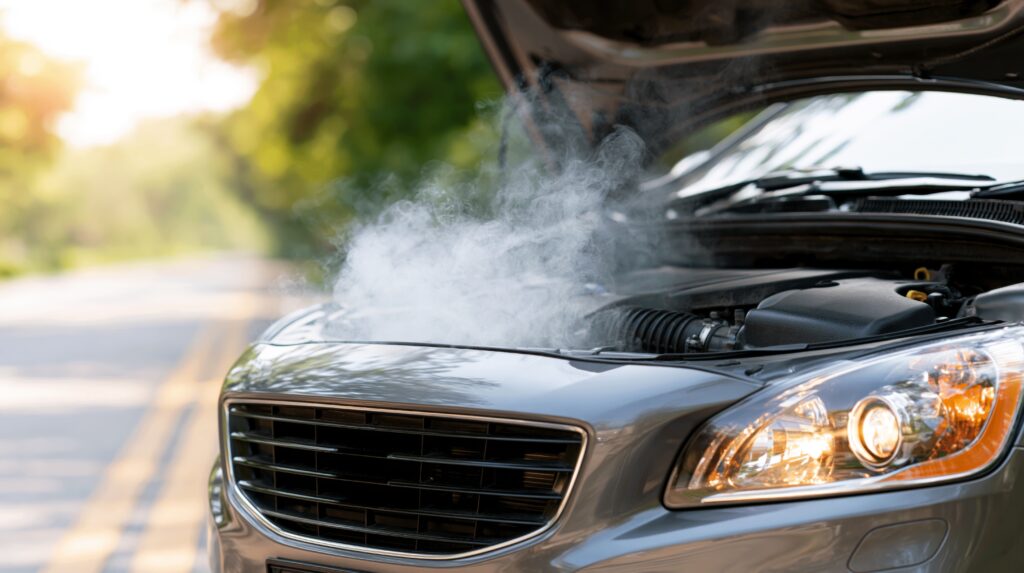
    Leaking fluid may contact a hot engine or exhaust component, creating smoke or steam.

    Coolant commonly creates steam, while engine oil can produce bluish or gray smoke and a burning odor. Other fluids may generate different smells and appearances.

    If smoke or steam appears:

    1. Pull over safely.
    2. Turn off the engine.
    3. Do not open a pressurized cooling system.
    4. Keep away from flames and sparks.
    5. Arrange professional assistance.

    Do not assume the vehicle is safe because the smoke stops after the engine cools. The leak may return as soon as the system heats and becomes pressurized again.

    📉 Frequently Low Fluid Levels

    A fluid level that repeatedly drops is a major warning sign, even when no puddle is visible.

    Fluid may:

    • Leak only while the engine runs
    • Contact a hot component and burn away
    • Collect inside an underbody cover
    • Leak internally
    • Escape only under pressure
    • Be consumed by the engine
    • Leak while the vehicle is moving

    Continually topping off a fluid without locating the cause can hide a worsening problem.

    Record how much fluid is being added and how often. This information can help a technician evaluate the rate of loss.

    🚨 Dashboard Warning Lights

    A fluid leak may activate a warning light or message, including:

    • Low oil pressure
    • High engine temperature
    • Low coolant
    • Brake-system warning
    • Transmission warning
    • Low washer fluid
    • Power-steering warning
    • Check engine light

    Warning lights should be interpreted using the owner’s manual for the specific vehicle.

    An oil-pressure warning, overheating warning, brake warning accompanied by poor pedal response, or active fuel leak may require you to stop driving immediately.

    Call 10 Degrees Automotive at 951.414.9423 if you need help determining the safest response.

    🧰 Why Fluid Color Alone Is Not Enough

    Online charts often assign one color to each automotive fluid, but real-world identification is more complicated.

    Fluid color can change because of:

    • Age
    • Heat
    • Contamination
    • Manufacturer formulation
    • Mixing
    • Contact with dirt or rust
    • The surface beneath the leak

    Different fluids may also use similar colors. Transmission fluid is not always red, coolant is not always green, and brake fluid can resemble clean engine oil.

    A technician considers the fluid’s location, odor, texture, system level, leak path, and vehicle design before identifying the source.

    🔍 How a Professional Leak Inspection Works

    Finding an automotive leak may require more than looking for the wettest component. Airflow and gravity can spread fluid far from its origin.

    A professional inspection may include:

    • Cleaning contaminated surfaces
    • Checking fluid levels
    • Inspecting hoses and connections
    • Examining seals and gaskets
    • Pressure-testing the cooling system
    • Using ultraviolet dye when appropriate
    • Inspecting underbody covers
    • Running the engine while observing the system
    • Checking for internal fluid loss
    • Reinspecting after a road test

    The goal is to locate the highest and earliest point in the leak path, confirm the fluid, and determine the correct repair.

    💰 Why Early Leak Repair Can Save Money

    A small leak is often easier and less expensive to repair before the fluid level becomes critically low.

    Ignoring a leak can lead to:

    • Engine damage
    • Transmission damage
    • Overheating
    • Brake failure
    • Power-steering pump damage
    • Belt or hose deterioration
    • Electrical problems
    • Environmental contamination
    • A roadside breakdown

    A leaking gasket, hose, or seal may be manageable. The damage caused by operating an expensive component without enough fluid may not be.

    Prompt fluid leak diagnosis and repair helps protect both the leaking system and nearby components.

    🔧 Schedule Fluid-Leak Repair in Corona

    Fluid spots, falling levels, unusual odors, smoke, dashboard warnings, and changes in vehicle performance can all indicate an automotive leak.

    Some moisture beneath a vehicle is normal air-conditioning condensation, but oil, coolant, transmission fluid, brake fluid, power-steering fluid, and fuel should not be ignored.

    For automotive fluid-leak repair in Corona, contact 10 Degrees Automotive. We can identify the fluid, trace the source, explain the findings, and recommend the appropriate repair.

    Call 951.414.9423 today to schedule your inspection. Let 10 Degrees Automotive address the leak before lost fluid leads to a larger and more expensive problem.

  • 🛢️ What Happens When You Wait Too Long for an Oil Change?

    By 10 Degrees Automotive | Corona | 951.414.9423

    What Happens When You Wait Too Long for an Oil Change?

    An oil change is one of the most familiar vehicle maintenance services, but it is also one of the easiest to postpone. Your car may continue starting and driving normally after the recommended interval, which can create the impression that delaying service is harmless.

    Inside the engine, however, the oil is continuously exposed to heat, pressure, combustion byproducts, moisture, and contaminants. As it ages, it can become less effective at lubricating moving components, controlling deposits, and carrying heat away from critical areas.

    Waiting too long for an oil change may contribute to reduced performance, accelerated wear, sludge formation, overheating, and expensive engine damage. The longer the service is delayed, the greater the potential risk.

    If your vehicle is due or overdue for an oil change in Corona, call 10 Degrees Automotive at 951.414.9423 to schedule your service.

    ⚙️ What Does Engine Oil Do?

    An engine contains many metal components moving at high speeds and under significant pressure. Engine oil creates a protective film between those surfaces to reduce friction and wear.

    Oil performs several important jobs:

    • Lubricating internal engine components
    • Carrying heat away from moving parts
    • Suspending dirt and contaminants
    • Helping control sludge and deposits
    • Protecting against corrosion
    • Supporting hydraulic components
    • Helping piston rings seal properly
    • Cleaning internal surfaces as it circulates

    Modern engines may also rely on oil pressure to operate variable valve timing systems, timing-chain tensioners, turbochargers, and other precision components.

    When the oil level is low or the oil has deteriorated, these systems may not receive the protection or pressure they require.

    🔥 Heat Gradually Breaks Down Engine Oil

    Engine oil operates in an extremely hot environment. Each trip subjects it to heating and cooling cycles that gradually alter its properties.

    High temperatures can accelerate oxidation, which causes oil to thicken and form deposits. Short trips can create a different problem by preventing the engine from remaining hot long enough to evaporate accumulated moisture and fuel contamination.

    Over time, the oil may become:

    • Oxidized
    • Contaminated
    • Thickened
    • Diluted with fuel
    • Loaded with combustion byproducts
    • Less effective at controlling deposits
    • Less able to protect under extreme conditions

    High-quality modern oils are engineered to resist breakdown, but no engine oil lasts forever. It must eventually be drained and replaced.

    🧪 Contaminants Accumulate in Old Oil

    Combustion produces soot, acids, moisture, and other byproducts. Small amounts can enter the crankcase and mix with the oil.

    The engine may also generate microscopic particles through normal wear. The oil filter captures many contaminants, but it has a limited capacity.

    As mileage and time accumulate, the oil carries an increasing amount of material. If the oil and filter remain in service too long, contaminants may circulate through sensitive engine passages and moving components.

    Regular engine oil and filter changes remove much of this material and replace the oil’s depleted additives.

    🧱 Sludge and Deposits May Form

    When neglected oil combines with heat, moisture, fuel, and contaminants, it can form thick deposits commonly called engine sludge.

    Sludge may collect in:

    • Oil passages
    • The oil pan
    • The valve cover area
    • Timing components
    • Oil-control valves
    • Turbocharger oil lines
    • Oil-pump pickup screens

    Restricted oil passages can prevent lubrication from reaching critical components. Sludge can also interfere with variable valve timing systems and other mechanisms that depend on clean oil and precise pressure.

    Removing severe sludge is not always simple. In some cases, accumulated deposits may already have caused internal wear or damaged components.

    Following the appropriate oil change schedule is far less costly than repairing a sludge-damaged engine.

    🔩 Internal Engine Wear Can Accelerate

    Fresh oil separates moving metal surfaces with a protective lubricating film. As oil becomes degraded, contaminated, or too low, that protection may weaken.

    Increased friction can accelerate wear on:

    • Camshafts
    • Crankshaft bearings
    • Connecting-rod bearings
    • Timing chains
    • Pistons and cylinder walls
    • Valve-train components
    • Turbocharger bearings
    • Oil pumps

    This damage may develop gradually without an obvious symptom. By the time knocking, ticking, or low oil pressure appears, significant wear may already have occurred.

    An oil change cannot reverse mechanical damage. Its purpose is to help prevent avoidable wear before it happens.

    🌡️ Your Engine May Run Hotter

    The cooling system controls most engine temperature, but the oil also helps carry heat away from internal parts.

    Old, thickened, contaminated, or insufficient oil may not circulate and transfer heat as effectively. Increased friction can create additional heat at the same time.

    Excessive internal temperature may accelerate oil breakdown and create a damaging cycle:

    1. Oil deteriorates.
    2. Friction and heat increase.
    3. Higher temperatures break down the oil faster.
    4. Lubrication becomes less effective.
    5. Component wear increases.

    An overheating warning should never be dismissed as simply an oil-change reminder. Cooling-system problems, low oil pressure, and other serious conditions require immediate attention.

    ⛽ Fuel Economy and Performance May Suffer

    An overdue oil change will not always create an obvious performance problem, but increased friction, deposits, incorrect oil viscosity, or oil-controlled system faults can make the engine work harder.

    Possible symptoms include:

    • Reduced fuel economy
    • Sluggish acceleration
    • Rough operation
    • Engine ticking
    • Variable valve timing faults
    • Check engine warnings
    • Reduced power
    • Difficult starting

    Many conditions can cause these symptoms, so professional diagnosis is necessary. Replacing the oil may help when maintenance is overdue, but it will not repair a worn component or resolve every engine problem.

    🔗 Timing Components May Be Affected

    Many modern engines use timing chains that depend on engine oil for lubrication. Hydraulic tensioners and variable valve timing components may also rely on clean oil and proper pressure.

    Neglected oil can contribute to:

    • Timing-chain wear
    • Tensioner problems
    • Rattling during startup
    • Camshaft timing faults
    • Check engine lights
    • Poor engine performance
    • Major internal damage if timing is lost

    Timing-system repairs can be extensive. Using the correct oil and changing it on schedule can help these components operate as designed.

    🌀 Turbocharged Engines Need Proper Oil Care

    Turbochargers operate at extremely high speeds and temperatures. Many are lubricated and cooled by engine oil.

    Old, contaminated, low, or incorrect oil can increase the risk of:

    • Turbocharger bearing wear
    • Restricted oil passages
    • Oil coking
    • Excessive shaft movement
    • Smoke from the exhaust
    • Reduced boost
    • Turbocharger failure

    Turbocharged vehicles may have specific oil-quality, viscosity, and service requirements. Following the manufacturer’s specifications is especially important.

    Never assume that every synthetic oil is appropriate for every turbocharged engine. The required performance standard matters as much as the viscosity grade.

    📉 Low Oil Level Can Make the Problem Worse

    Engines may lose oil through leaks or consume it during operation. If the oil level is never checked between services, it can fall dangerously low before the next oil change.

    A low oil level means the remaining oil must work harder. It may run hotter, become contaminated more quickly, and struggle to maintain proper pressure during turning, braking, or acceleration.

    Common signs of an oil leak or consumption problem include:

    • Oil spots under the vehicle
    • A burning-oil smell
    • Blue exhaust smoke
    • Frequent need to add oil
    • Oil residue around the engine
    • A low-oil warning
    • Engine noise

    Check the oil according to the instructions in your owner’s manual. If the level repeatedly falls, schedule an inspection to determine why.

    Adding oil may restore the level, but it does not replace an overdue oil change or repair a leak.

    🚨 Oil-Change Reminder vs. Oil-Pressure Warning

    Drivers should understand the difference between a maintenance reminder and an oil-pressure warning.

    Oil-change or maintenance reminder

    This message generally indicates that scheduled service is due based on mileage, time, or the vehicle’s oil-life monitoring system. Schedule the service soon.

    Oil-pressure warning

    This warning commonly resembles an oil can and may indicate that the engine is not receiving adequate oil pressure. It can represent an immediate threat to the engine.

    If the oil-pressure warning light appears while driving:

    • Pull over as soon as it is safe
    • Turn off the engine
    • Do not continue driving
    • Arrange professional assistance

    Even if the oil level is correct, a failing pump, blocked passage, sensor fault, or internal problem may be responsible.

    📅 How Often Should You Change Your Oil?

    There is no single oil-change interval that is correct for every vehicle.

    The appropriate interval depends on:

    • Manufacturer recommendations
    • Engine design
    • Oil specification
    • Conventional or synthetic formulation
    • Mileage
    • Time
    • Driving conditions
    • Towing or heavy loads
    • Frequent short trips
    • Extended idling
    • Dust and extreme temperatures

    Some modern vehicles use oil-life monitoring systems that estimate service needs based on operating conditions. Others use fixed mileage and time intervals.

    Consult the owner’s manual for the correct schedule. Follow both the mileage and time requirements because oil can deteriorate even when the vehicle is driven infrequently.

    🛠️ Can You Fix Neglect With One Oil Change?

    If an oil change is only moderately overdue and the engine has not been damaged, replacing the oil and filter may restore the maintenance schedule.

    Severe neglect is more complicated.

    A single oil change cannot reverse:

    • Bearing wear
    • Damaged timing components
    • Scored cylinder walls
    • A failed turbocharger
    • Low compression
    • Oil-pump damage
    • Heavy sludge accumulation

    Aggressive chemical flushing may also create risks in a heavily sludged engine by loosening deposits that can block oil passages. Any cleaning approach should be based on the engine’s condition and a professional evaluation.

    The safest strategy is consistent maintenance from the beginning.

    💰 Delayed Oil Changes Can Become Expensive Repairs

    Oil and filter service is a predictable maintenance expense. Internal engine repair is not.

    Waiting too long may lead to repairs involving:

    • Variable valve timing components
    • Timing chains and tensioners
    • Camshafts
    • Turbochargers
    • Oil pumps
    • Engine bearings
    • Cylinder heads
    • Complete engine replacement

    The exact outcome depends on the engine and severity of neglect, but the financial lesson is consistent: preventive oil changes cost far less than engine repair.

    Routine service also allows technicians to identify fluid leaks, damaged belts, worn hoses, low tire pressure, and other concerns before they become emergencies.

    ✅ Signs Your Oil Change May Be Overdue

    Your vehicle may need immediate attention if you notice:

    • An oil-change reminder
    • A low oil level
    • Dark or contaminated oil
    • Engine ticking or rattling
    • A burning-oil smell
    • Reduced performance
    • Oil spots beneath the vehicle
    • A check engine light
    • An unknown maintenance history
    • Mileage or time beyond the recommended interval

    Oil color alone is not a reliable measure of remaining life. Some oils darken quickly while continuing to provide protection. Use the manufacturer’s interval, oil-life monitor, maintenance records, and professional inspection to guide service.

    🔧 Schedule an Oil Change in Corona

    Waiting too long for an oil change can allow heat, friction, sludge, and contaminants to damage critical engine components. The vehicle may appear to operate normally while harmful wear develops internally.

    Regular oil and filter changes help protect the engine, support proper temperature control, preserve timing and turbocharger components, and reduce the risk of expensive repairs.

    If your vehicle is due for service or you do not know when the oil was last changed, contact 10 Degrees Automotive in Corona.

    Call 951.414.9423 today to schedule your oil change and maintenance inspection. Let 10 Degrees Automotive help protect your engine before neglected oil becomes a costly problem.

  • 🔧 Dealership vs. Independent Auto Repair Shop: Which Is Better?

    By 10 Degrees Automotive | Corona | 951.414.9423

    Dealership vs. Independent Auto Repair Shop: Which Is Better?

    When your vehicle needs maintenance or repair, one of the first decisions is where to take it. Should you return to the dealership, or should you choose a local independent automotive repair shop?

    There is no universal answer for every driver and every repair. Dealership service departments and independent shops can both provide valuable services, but they often differ in cost structure, customer experience, flexibility, brand specialization, and the types of work they handle.

    Understanding those differences can help you choose the right facility for your vehicle, budget, and current repair needs.

    If you are searching for an independent auto repair shop in Corona, contact 10 Degrees Automotive at 951.414.9423 to discuss your vehicle’s maintenance or repair needs.

    🏢 What Is a Dealership Service Department?

    A dealership service department operates as part of a business authorized to sell vehicles from one or more manufacturers. Its technicians commonly work on the same vehicle brand or group of related brands throughout the day.

    Dealerships often have direct access to:

    • Manufacturer-specific repair information
    • Factory diagnostic equipment
    • Software updates
    • Original-equipment parts
    • Technical service information
    • Warranty procedures
    • Recall information
    • Brand-specific training

    This concentration can make a dealership a logical choice for certain manufacturer-specific concerns, warranty repairs, recalls, or advanced programming.

    However, the dealership setting is only one factor. The experience, communication, diagnostic process, and workmanship of the individual facility still matter.

    🧰 What Is an Independent Auto Repair Shop?

    An independent repair shop is not owned or operated by a vehicle manufacturer. Many independent facilities service a variety of domestic, Asian, and European vehicles, while others specialize in selected brands or types of repair.

    An independent automotive repair shop may provide:

    • Routine maintenance
    • Brake service
    • Engine diagnostics
    • Cooling-system repair
    • Suspension and steering service
    • Battery and electrical testing
    • Air-conditioning repair
    • Oil and fluid service
    • Pre-purchase inspections
    • General mechanical repair

    Independent shops frequently build their businesses around long-term relationships with drivers in the surrounding community. Customers may communicate directly with the people inspecting, diagnosing, or repairing their vehicles.

    At 10 Degrees Automotive in Corona, our goal is to help drivers understand what their vehicles need and why.

    💰 How Do Repair Costs Compare?

    Price is one of the primary reasons drivers compare dealerships and independent shops.

    Dealerships often have large facilities, extensive administrative operations, brand-specific equipment, customer amenities, and other overhead expenses. Those costs may be reflected in labor rates and service pricing.

    Independent shops may have a different operating structure and may be able to offer competitive pricing. However, this does not mean every independent shop is cheaper for every service or that the lowest estimate always provides the best value.

    A repair estimate may differ based on:

    • Labor rate
    • Estimated labor time
    • Diagnostic procedures
    • Parts brand and quality
    • Warranty coverage
    • Shop supplies
    • Additional required components
    • Included inspections or services

    When comparing estimates, make sure they cover the same work. One estimate may include related hardware, fluids, testing, or procedures that another leaves out.

    A lower number is not automatically a better value if the diagnosis is incomplete or the components do not meet the vehicle’s requirements.

    🔩 What Types of Parts Are Used?

    Dealerships typically use original-equipment manufacturer parts, commonly called OEM parts. These components are supplied through the manufacturer’s parts network and are designed for specific vehicle applications.

    Independent shops may offer several options, including:

    • OEM parts
    • Original-equipment supplier parts
    • High-quality aftermarket parts
    • Remanufactured components
    • Application-specific alternatives

    Aftermarket does not automatically mean low quality. The aftermarket includes everything from budget parts to premium components that meet or exceed original specifications in particular applications.

    The right choice depends on the vehicle, component, budget, expected service life, availability, and warranty.

    Ask which parts are included in an estimate and why they are being recommended. A trustworthy auto repair shop should be willing to explain the available options.

    🧑‍🔧 Does Technician Experience Matter More Than the Building?

    A dealership sign does not repair a vehicle—the technician does. The same is true at an independent shop.

    The quality of a repair depends heavily on:

    • Technician training
    • Hands-on experience
    • Diagnostic ability
    • Access to accurate information
    • Proper tools and equipment
    • Attention to detail
    • Quality-control procedures
    • Clear communication

    Dealership technicians may develop deep familiarity with a particular brand. Independent technicians often gain broad experience across several manufacturers and vehicle systems.

    Neither background is automatically better for every situation. The important question is whether the facility has the knowledge, information, tools, and experience required for your specific vehicle and concern.

    💻 Can Independent Shops Diagnose Modern Vehicles?

    Modern vehicles contain complex electronic systems, networks, modules, sensors, and software. Professional diagnosis may require more than retrieving a basic trouble code.

    A capable independent shop may use:

    • Professional scan tools
    • Digital multimeters
    • Oscilloscopes
    • Smoke-testing equipment
    • Battery and charging-system testers
    • Pressure and vacuum testing tools
    • Vehicle-specific service information
    • Mechanical inspection procedures

    Tool access and capabilities vary among individual facilities, whether they are dealerships or independent shops.

    Some programming, security, warranty, or manufacturer-controlled procedures may still require dealership involvement. A responsible independent shop should recognize when a task falls outside its available equipment or scope and communicate that clearly.

    🤝 Customer Service and Communication

    The customer experience can differ significantly between facilities.

    At a large dealership, you may communicate primarily with a service advisor. The technician may send notes, photos, videos, or recommendations through the advisor rather than speaking with you directly.

    At an independent shop, communication may feel more personal. You may interact with the owner, technician, or the same advisor during each visit.

    A strong repair experience should include:

    • A clear description of the concern
    • An explanation of diagnostic findings
    • A written estimate
    • Authorization before additional work
    • Information about parts and warranties
    • Prioritized recommendations
    • Answers to your questions

    The best shop is one that communicates in a way you understand and gives you enough information to make an informed decision.

    Call 10 Degrees Automotive at 951.414.9423 to discuss your vehicle and experience our customer-focused approach.

    📅 Convenience and Appointment Availability

    Dealerships may offer large waiting areas, loaner-vehicle programs, shuttle service, extended hours, or online scheduling. Availability and policies vary by location.

    Independent shops may offer more flexible or direct scheduling and may be able to provide a more personalized experience. Smaller operations can also have limited capacity during busy periods.

    When comparing convenience, consider:

    • Distance from home or work
    • Appointment availability
    • Estimated turnaround time
    • Transportation options
    • Communication preferences
    • After-hours drop-off
    • Parts availability
    • Whether specialized equipment is needed

    The most convenient facility is not necessarily the closest one. Accurate diagnosis and dependable repair can save more time than repeatedly returning for the same unresolved problem.

    🚘 When a Dealership May Be the Better Choice

    There are situations in which visiting a dealership may make the most sense.

    A dealership may be appropriate for:

    • Manufacturer recall work
    • Repairs covered by a factory warranty
    • Certain software updates
    • Brand-specific campaigns
    • Specialized module programming
    • Security or immobilizer procedures
    • Unusual problems requiring factory involvement
    • Services included in a prepaid maintenance plan

    Recall repairs are generally coordinated through an authorized dealership for the affected brand. If you receive a recall notice, follow the manufacturer’s instructions.

    For warranty questions, review the warranty documentation and contact the appropriate provider before authorizing work. Requirements can vary depending on the warranty and repair.

    🔧 When an Independent Shop May Be the Better Choice

    An independent shop can be an excellent option for routine maintenance, wear-related repairs, diagnostics, and long-term vehicle care.

    You may prefer an independent facility when you value:

    • Direct communication
    • A continuing relationship with one shop
    • Competitive service options
    • Flexibility in parts selection
    • Maintenance for multiple vehicle brands
    • Personalized recommendations
    • A local community connection
    • An alternative after the factory warranty period

    A dependable independent shop can become familiar with your vehicle’s history, recurring concerns, and upcoming maintenance needs.

    This continuity can help prevent duplicate services and make it easier to plan future repairs.

    📝 What About Your Vehicle Warranty?

    Drivers sometimes believe that all maintenance must be performed at the dealership to preserve warranty coverage. Warranty terms, documentation requirements, and applicable rules can vary, so the safest approach is to read your warranty information carefully.

    Wherever maintenance is completed:

    • Follow the manufacturer’s required schedule
    • Use fluids and parts that meet the required specifications
    • Keep detailed invoices and receipts
    • Record dates and mileage
    • Document the services performed
    • Address warranty concerns through the appropriate provider

    If a repair may be covered under a factory, extended, or third-party warranty, verify the authorization requirements before work begins.

    Good documentation protects you regardless of which qualified facility performs the maintenance.

    🔍 Questions to Ask Before Choosing a Repair Shop

    Whether you choose a dealership or independent shop, ask questions before authorizing a repair.

    Helpful questions include:

    • Does the shop regularly service my type of vehicle?
    • How will the problem be diagnosed?
    • Is diagnostic time included in the estimate?
    • What parts will be used?
    • What warranty applies to the repair?
    • Will I receive a written estimate?
    • Will the shop contact me before additional work?
    • Which recommendations are urgent?
    • Which services can be planned for later?
    • Will the findings be explained clearly?

    Pay attention to how the facility answers. Clear, patient communication can be as important as the price on the estimate.

    ⚠️ Warning Signs of a Poor Repair Experience

    The type of facility matters less than how it conducts business. Be cautious if any dealership or independent shop:

    • Refuses to explain the diagnosis
    • Pressures you to approve work immediately without a safety reason
    • Cannot describe which parts will be installed
    • Performs additional repairs without authorization
    • Provides vague estimates
    • Recommends replacing parts without appropriate testing
    • Dismisses your questions
    • Cannot explain warranty coverage
    • Makes guarantees that sound unrealistic

    Professional automotive repair should be based on inspection, testing, clear communication, and informed authorization.

    ⚖️ Which Option Is Actually Better?

    The better choice depends on the vehicle and the service required.

    Choose a dealership when the repair involves a recall, factory warranty, specialized manufacturer campaign, or procedure available only through an authorized dealer.

    Consider an independent shop when you want ongoing maintenance, general repair, professional diagnostics, flexible parts options, and a long-term relationship with a local automotive team.

    For many drivers, the best strategy is not choosing one option forever. You can use the dealership when manufacturer involvement is necessary and rely on a trusted independent shop for everyday maintenance and repair.

    The goal is to select the facility best equipped for the specific job.

    🏆 Why Drivers Choose Independent Auto Repair

    A strong independent shop can provide a combination of technical ability, personal communication, and continuity.

    When the same facility maintains your vehicle over time, it can track:

    • Previous repairs
    • Maintenance intervals
    • Fluid services
    • Tire and brake wear
    • Developing leaks
    • Recurring symptoms
    • Future service priorities

    This history makes it easier to build a practical maintenance plan based on the actual vehicle rather than isolated visits.

    A local independent shop also depends on trust, repeat business, and community reputation. That creates a strong incentive to provide clear explanations and dependable work.

    🔧 Choose 10 Degrees Automotive in Corona

    The dealership-versus-independent-shop decision is not about declaring that one type of business is always better. It is about choosing knowledgeable professionals who can properly diagnose your vehicle, explain the findings, and perform the appropriate service.

    For routine maintenance, brake repair, engine diagnostics, cooling-system concerns, suspension service, electrical testing, and general auto repair in Corona, turn to 10 Degrees Automotive.

    Call 951.414.9423 today to schedule an appointment. Let our team help you understand your vehicle’s needs and keep it operating safely and reliably.

  • ⚠️ Is It Safe to Drive With a Dashboard Warning Light On?

    By 10 Degrees Automotive | Corona | 951.414.9423

    Is It Safe to Drive With a Dashboard Warning Light On?

    A dashboard warning light can appear without warning and leave you wondering whether you should keep driving, schedule an appointment, or pull over immediately. The correct response depends on which symbol is illuminated, its color, whether it is flashing, and how the vehicle is behaving.

    Some dashboard lights are routine reminders or status indicators. Others warn of conditions that can damage the engine, affect braking, disable an important safety system, or leave you stranded.

    So, is it safe to drive with a dashboard warning light on? Sometimes you can drive carefully to a repair facility, but certain warnings require you to stop as soon as it is safe.

    If you are unsure what a warning light means, consult your owner’s manual and contact 10 Degrees Automotive in Corona at 951.414.9423 for professional assistance.

    🚦 Dashboard Warning Light Colors Matter

    Manufacturers use different symbols and colors, so your owner’s manual is the best reference for your specific vehicle. In general, dashboard lights fall into three categories.

    Red warning lights

    A red light often indicates a serious condition, a safety concern, or a problem requiring immediate attention. Examples may include warnings for oil pressure, overheating, brakes, or the charging system.

    Do not assume that every red light means you can continue driving to a repair shop. Some conditions can cause severe damage within minutes.

    Yellow or amber warning lights

    An amber light usually indicates a problem that should be diagnosed soon. The vehicle may continue operating, but a system could be malfunctioning or working with limited capability.

    Examples include the check engine light, anti-lock braking system light, traction-control warning, and tire-pressure warning.

    Green, blue, or white indicator lights

    These colors usually show that a feature is operating. They may indicate high beams, cruise control, turn signals, exterior lighting, or another active system.

    They are generally informational rather than warnings, but drivers should still understand what each symbol means.

    🛢️ Oil-Pressure Warning: Stop the Engine

    The oil-pressure warning commonly resembles an oil can. It can indicate that the engine is not receiving adequate oil pressure.

    Low oil pressure may result from:

    • A low oil level
    • An oil leak
    • A failing oil pump
    • Internal engine wear
    • A clogged oil passage
    • A faulty pressure sensor or electrical circuit

    Even if the cause turns out to be a sensor problem, continuing to drive without proper oil pressure can severely damage the engine.

    If the oil-pressure warning light appears while driving, pull over safely and turn off the engine. Do not continue operating the vehicle until the cause has been evaluated.

    Checking the oil level may provide useful information, but adding oil does not guarantee that pressure has been restored. If you are uncertain, arrange towing to a qualified auto repair facility.

    🌡️ Engine-Temperature Warning: Pull Over Safely

    An engine-temperature light or gauge in the red zone indicates that the engine may be overheating. Steam, coolant odors, reduced performance, or coolant beneath the vehicle may accompany the warning.

    Possible causes include:

    • Low coolant
    • A coolant leak
    • A failing thermostat
    • A damaged radiator
    • A malfunctioning cooling fan
    • A weak water pump
    • A broken belt
    • Internal engine problems

    Continuing to drive an overheating vehicle can cause head-gasket failure, warped engine components, or complete engine damage.

    Turn off the air conditioner, pull over safely, and shut down the engine. Never remove a radiator or coolant-system cap while the system is hot and pressurized.

    Call 10 Degrees Automotive at 951.414.9423 or arrange roadside assistance before driving the vehicle again.

    🛑 Brake-System Warning: Take It Seriously

    The red brake warning light may appear when the parking brake is engaged. If it remains illuminated after the parking brake is fully released, the vehicle may have low brake fluid or another hydraulic-system problem.

    A brake warning is especially urgent if you also notice:

    • A soft or sinking pedal
    • Increased stopping distance
    • Pulling during braking
    • Fluid beneath the vehicle
    • Grinding noises
    • Reduced braking response

    If the brakes do not feel normal, do not continue driving. Pull over safely and have the vehicle transported for a professional brake inspection.

    Low brake fluid should not simply be topped off without investigating the cause. The level may be low because of pad wear, a leak, or another condition requiring repair.

    🔋 Battery or Charging-System Warning

    A battery-shaped warning light usually indicates a charging-system problem rather than automatically proving that the battery itself is bad.

    Potential causes include:

    • A failing alternator
    • A damaged drive belt
    • Loose or corroded connections
    • Wiring problems
    • A weak battery
    • A charging-system control fault

    When the charging system stops working, the vehicle may continue running temporarily using stored battery power. Once that power is depleted, the engine can stall and may not restart.

    Turn off unnecessary electrical accessories and move to a safe location. Because the remaining driving time is unpredictable, have the vehicle inspected promptly.

    If the warning appears with overheating, heavy steering, unusual belt noise, or multiple electrical warnings, stop driving and arrange assistance.

    🚨 Check Engine Light: Steady or Flashing?

    The check engine light can appear for many reasons, from an evaporative-emissions leak to an engine misfire.

    A steady check engine light usually means the vehicle should be diagnosed soon. If the car runs normally and no other serious warnings appear, you may be able to drive carefully to a repair shop.

    A flashing check engine light is more urgent. It can indicate a severe misfire that may overheat and damage the catalytic converter.

    If the light flashes:

    • Reduce your speed
    • Avoid hard acceleration
    • Avoid towing or heavy loads
    • Pull over if the engine is shaking or losing power
    • Arrange professional diagnostics promptly

    Do not clear the code and assume the underlying problem has disappeared. The code is only a starting point; accurate diagnosis may require additional testing.

    🛞 Tire-Pressure Warning Light

    The tire-pressure monitoring system light usually resembles a tire cross-section with an exclamation point. It indicates that one or more tires may be significantly underinflated or that the monitoring system has detected a fault.

    Underinflated tires may:

    • Handle poorly
    • Wear unevenly
    • Generate excessive heat
    • Reduce fuel economy
    • Be more vulnerable to failure

    Reduce your speed and stop somewhere safe to inspect the tires. If one appears flat, bulging, or damaged, do not continue driving on it.

    Cold weather and normal pressure loss can also trigger the warning, but the tires should still be checked with an accurate gauge and inflated according to the vehicle manufacturer’s specifications.

    If the light flashes before remaining illuminated, the monitoring system itself may require service.

    🧍 Airbag or Supplemental Restraint Warning

    An airbag warning may be labeled with an airbag symbol or letters such as SRS. It can indicate a problem with the airbags, seat-belt pretensioners, occupant sensors, or related electronics.

    The vehicle may continue to drive normally, but one or more restraint-system components might not operate as intended during a collision.

    Because the airbag system is a major safety feature, schedule diagnosis promptly. Do not attempt to test airbag circuits with ordinary electrical tools, as improper handling can be dangerous.

    🌀 ABS Warning Light

    The anti-lock braking system helps prevent wheel lockup during hard braking. If the ABS warning light appears, the vehicle may retain conventional braking, but the anti-lock function could be unavailable.

    You may also lose related features such as traction control or electronic stability assistance, depending on the vehicle.

    Drive cautiously and schedule an inspection. If the red brake-system light appears at the same time or the pedal feels abnormal, stop driving and seek professional assistance.

    ABS problems can involve wheel-speed sensors, wiring, tone rings, hydraulic components, fuses, or electronic modules. Diagnostic testing is needed to identify the source.

    🚗 Traction-Control or Stability-Control Warning

    A flashing traction-control indicator may simply mean that the system is actively responding to wheel slip. A light that stays on can indicate that the system has been switched off or has detected a malfunction.

    When traction or stability control is unavailable, the vehicle may be more difficult to control during rain, loose-road conditions, or emergency maneuvers.

    Use extra caution and avoid aggressive driving. If the light remains on, have the vehicle inspected.

    A traction-control warning may be related to another problem, such as a faulty wheel-speed sensor or an engine-management issue.

    🛠️ Power-Steering Warning

    Vehicles with electric power steering may display a steering-wheel symbol or warning message if the assist system malfunctions.

    The steering wheel may become much harder to turn, especially at low speeds. Mechanical or hydraulic steering systems may also have separate warnings or symptoms.

    If steering effort increases suddenly:

    • Keep both hands on the wheel
    • Reduce your speed
    • Avoid abrupt maneuvers
    • Move to a safe location
    • Arrange professional assistance

    Continuing to drive with significantly reduced steering assistance can be unsafe, particularly in traffic or during parking maneuvers.

    ⛽ Low-Fuel Warning

    The low-fuel light is not usually a mechanical emergency, but repeatedly driving with very little fuel can leave you stranded. Running out of fuel can also create unsafe situations if the engine stalls in traffic.

    Refuel as soon as practical rather than assuming the remaining range is exact. Hills, traffic, load, weather, and driving habits can affect how far the vehicle will travel.

    If the fuel warning appears immediately after refueling or the gauge behaves unpredictably, the level sensor or instrument system may need attention.

    🧰 Why You Should Not Ignore Warning Lights

    A warning light does not always mean that a major component has already failed. It often means the vehicle has detected a problem early enough to give you time to respond.

    Ignoring the warning may allow a smaller issue to cause:

    • Additional component damage
    • Poor fuel economy
    • Increased emissions
    • Reduced braking or steering assistance
    • Overheating
    • A roadside breakdown
    • More expensive repairs

    For example, a small coolant leak can become an overheating emergency. A misfire can damage the catalytic converter. A low tire can overheat and fail. A charging-system issue can leave the vehicle without enough power to operate.

    Prompt dashboard warning light diagnostics may help reduce these risks.

    🔍 Why Reading a Code Is Not a Complete Diagnosis

    Some dashboard warnings cause the vehicle’s computer to store diagnostic trouble codes. A basic scanner can retrieve those codes, but it cannot always determine why the problem occurred.

    A code identifies a detected condition or system. The actual cause may involve:

    • A failed component
    • Damaged wiring
    • A loose connector
    • A leak
    • Low fluid
    • Mechanical wear
    • Another system affecting the sensor reading

    Replacing a part based only on the code can waste money and leave the original problem unresolved.

    Professional diagnosis may include visual inspection, live-data review, electrical testing, pressure testing, fluid checks, or component-specific procedures.

    ✅ What Should You Do When a Warning Light Appears?

    When a new dashboard light comes on:

    1. Stay calm and maintain control of the vehicle.
    2. Note the color and symbol.
    3. Determine whether the light is steady or flashing.
    4. Look for other warning lights.
    5. Pay attention to temperature, noises, odors, smoke, and performance.
    6. Move to a safe location if the warning may be serious.
    7. Consult the owner’s manual.
    8. Contact a professional repair facility for guidance.

    Do not continue driving solely because the vehicle still moves. Oil-pressure loss, overheating, brake trouble, and tire damage can become significantly worse in a short distance.

    🔧 Schedule Warning-Light Diagnostics in Corona

    Whether it is safe to drive with a warning light depends on the specific warning and how your vehicle is behaving. A steady amber light may allow a careful trip to a repair shop, while a red oil-pressure, overheating, or brake warning may require you to stop immediately.

    When in doubt, prioritize safety and avoid driving until you understand the problem.

    For dashboard warning light diagnostics in Corona, contact 10 Degrees Automotive. We can evaluate the warning, test the related system, and explain the appropriate repair.

    Call 951.414.9423 today to schedule your appointment. Let 10 Degrees Automotive help you respond to warning lights before they become breakdowns or expensive repairs.

  • 🚗 Why Is My Car Shaking While Driving?

    By 10 Degrees Automotive | Corona | 951.414.9423

    Why Is My Car Shaking While Driving?

    A smooth-running vehicle should feel stable and controlled. If your car begins shaking, vibrating, or shuddering while driving, it is often a sign that something needs professional attention.

    The cause may be relatively straightforward, such as a tire that needs balancing. It could also involve damaged wheels, worn suspension components, brake problems, engine trouble, or a failing drivetrain part. The speed and driving conditions under which the vibration occurs can provide important clues, but a proper inspection is necessary to identify the actual problem.

    Ignoring car vibration while driving can allow tires and mechanical components to wear more quickly. In some cases, the condition may also affect steering, braking, or overall vehicle safety.

    If your vehicle is shaking or vibrating, call 10 Degrees Automotive in Corona at 951.414.9423 to schedule a professional inspection.

    🔍 Pay Attention to When the Shaking Happens

    Not all vibrations have the same cause. Before your appointment, note exactly when and where you feel the shaking.

    Consider whether the vibration occurs:

    • At idle
    • While accelerating
    • At a particular speed
    • At freeway speeds
    • When braking
    • During turns
    • While climbing a hill
    • After hitting a pothole
    • Through the steering wheel
    • Through the brake pedal
    • Through the seat or floor

    A steering-wheel vibration may direct attention toward the front tires, wheels, steering, suspension, or brakes. Shaking felt through the seat may be associated with the rear tires, rear suspension, or drivetrain, although these are only general clues.

    The conditions under which the symptom appears can help a technician reproduce and diagnose the concern.

    🛞 Unbalanced Tires Are a Common Cause

    Tires and wheels must rotate with their weight evenly distributed. Small balancing weights are attached to the wheel to compensate for differences in weight around the tire-and-wheel assembly.

    If a weight falls off or the assembly becomes unbalanced, you may notice vibration at certain speeds. It often becomes more obvious during freeway driving and may lessen when the vehicle slows.

    Possible signs of unbalanced tires include:

    • Steering-wheel vibration
    • Shaking that appears within a certain speed range
    • Uneven or cupped tire wear
    • Vibration after installing new tires
    • Shaking after a wheel impact

    Balancing the tires may correct the issue, but the complete assembly should also be inspected for tire damage, bent wheels, improper installation, or other problems.

    📐 Wheel-Alignment Problems Can Affect Stability

    Wheel alignment describes the angles at which the wheels meet the road. Potholes, curbs, collisions, worn suspension parts, and normal use can alter those angles.

    An alignment problem is more likely to cause pulling, an off-center steering wheel, or uneven tire wear than severe vibration by itself. However, the irregular tire wear created by poor alignment can eventually contribute to shaking.

    Signs your vehicle may need wheel alignment service include:

    • Pulling to the left or right
    • An off-center steering wheel
    • Rapid or uneven tread wear
    • Poor straight-line stability
    • Steering that feels unusual
    • Vibration associated with irregular tire wear

    Alignment should be performed only after worn or damaged steering and suspension components have been addressed. Aligning a vehicle with loose parts may not produce a lasting correction.

    ⚠️ Tire Damage Can Create Dangerous Shaking

    A damaged tire can cause vibration even when it is properly balanced. Internal belt separation, sidewall damage, uneven tread, flat spots, and bulges can make the tire roll irregularly.

    Tire damage may result from:

    • Pothole impacts
    • Curb strikes
    • Road debris
    • Underinflation
    • Overloading
    • Age
    • Manufacturing defects
    • Driving on a flat or severely low tire

    A visible bulge, exposed cord, severe crack, or distorted tread can indicate that the tire is no longer safe.

    If the vehicle suddenly begins shaking after an impact or you suspect tire damage, reduce your speed and stop in a safe location. Do not continue driving on a tire that appears structurally damaged.

    Contact 10 Degrees Automotive at 951.414.9423 for help determining the safest next step.

    🔩 Bent or Damaged Wheels May Cause Vibration

    Wheels can bend or crack after striking potholes, curbs, or road debris. Even a small amount of distortion can prevent the wheel from rotating smoothly.

    A bent wheel may cause:

    • Speed-related vibration
    • Air-pressure loss
    • Uneven tire wear
    • Steering-wheel movement
    • Difficulty balancing the tire
    • Visible wobbling

    Not every type of wheel damage is easily visible without placing the vehicle on a lift or using specialized equipment.

    A technician can inspect the wheel, measure runout, and determine whether it is repairable or should be replaced.

    🛑 Brake Problems Can Cause Shaking While Stopping

    If your vehicle shakes primarily when you apply the brakes, the braking system may be responsible.

    Brake rotors experience repeated heating and cooling. Over time, they can develop excessive runout, thickness variation, uneven pad deposits, scoring, or heat damage. When the brake pads contact an irregular rotor surface, you may feel pulsation through the pedal or vibration in the steering wheel.

    Other brake-related causes can include:

    • Sticking brake calipers
    • Uneven brake-pad wear
    • Contaminated brake surfaces
    • Damaged brake hardware
    • Loose components
    • Rear drum problems on equipped vehicles

    Because braking vibration may affect stopping performance, arrange a professional brake inspection rather than assuming the symptom is harmless.

    🔧 Worn Steering or Suspension Components

    The steering and suspension systems connect your vehicle to its wheels and help maintain tire contact with the road. Worn components can create looseness, vibration, noise, or unstable handling.

    Potential sources include:

    • Ball joints
    • Tie-rod ends
    • Control-arm bushings
    • Wheel bearings
    • Shocks and struts
    • Sway-bar links
    • Suspension mounts
    • Steering components

    You may also notice clunking over bumps, wandering, uneven tire wear, excessive bouncing, or loose steering.

    Replacing tires or balancing wheels will not solve a vibration caused by worn suspension parts. A hands-on inspection is necessary to check for looseness and component damage.

    ⚙️ Worn Wheel Bearings

    Wheel bearings allow the wheels to rotate while supporting the vehicle’s weight. As a bearing wears, it may create humming, growling, grinding, looseness, or vibration.

    The sound may change when the vehicle turns because cornering shifts the load from one side to the other. However, bearing symptoms vary, and tire noise can sometimes sound similar.

    A severely worn wheel bearing may affect wheel stability and should receive prompt attention. A technician can inspect for play, listen for abnormal operation, and rule out tire or drivetrain noise.

    🔥 Engine Misfires Can Make the Vehicle Shake

    If the vehicle shakes while stopped, idling, accelerating, or climbing a hill, the engine may not be running smoothly.

    An engine misfire occurs when one or more cylinders fail to produce power correctly. Possible causes include:

    • Worn spark plugs
    • Faulty ignition coils
    • Damaged wiring
    • Fuel-injector problems
    • Vacuum leaks
    • Low compression
    • Fuel-delivery problems
    • Sensor or electrical faults

    Additional symptoms may include a check engine light, hesitation, loss of power, difficult starting, or poor fuel economy.

    A flashing check engine light can indicate a severe misfire that may damage the catalytic converter. Reduce your speed, avoid hard acceleration, and stop driving if the vehicle is shaking severely or losing power.

    Professional diagnostic testing can determine why the misfire is occurring instead of relying on guesswork or unnecessary parts replacement.

    🧱 Damaged Engine or Transmission Mounts

    Engine and transmission mounts secure the powertrain to the vehicle while absorbing vibration. As mounts wear, crack, or collapse, they may allow excessive movement.

    You may notice:

    • Shaking while idling
    • A clunk when shifting into gear
    • Excess vibration during acceleration
    • Movement when starting or stopping
    • Noise from the engine compartment
    • Vibration that changes between park, drive, and reverse

    Mount problems can also place stress on hoses, wiring, exhaust components, and drivetrain connections.

    Because normal engine vibration can resemble a mount problem, the engine’s operating condition should be evaluated along with the mounts.

    🚙 Axle and Drivetrain Problems

    Axles, CV joints, driveshafts, and universal joints transfer power from the transmission to the wheels. Damage or wear in these components may produce vibration that becomes more noticeable during acceleration or at certain speeds.

    Possible drivetrain-related symptoms include:

    • Shaking during acceleration
    • Clicking while turning
    • Clunking when changing direction
    • Vibration through the floor
    • Grease near a wheel from a damaged CV boot
    • Noise that changes with speed or load

    A bent axle or damaged driveshaft may also create significant vibration. These concerns should be inspected promptly because drivetrain components rotate at high speeds and are essential to vehicle operation.

    🌬️ Could a Loose or Damaged Part Be Responsible?

    Sometimes shaking is caused by a loose or damaged component rather than normal wear.

    Examples may include:

    • A loose wheel
    • Missing or improperly tightened lug nuts
    • A damaged underbody panel
    • Loose exhaust components
    • Broken brackets
    • Road debris caught beneath the vehicle
    • Improperly installed replacement parts

    A loose wheel is an urgent safety concern. If the vehicle begins shaking immediately after tire or wheel service, stop as soon as it is safe and have the installation checked.

    Do not continue driving in the hope that a severe vibration will disappear.

    🚨 When Is Car Shaking an Emergency?

    Mild vibration should be inspected, but certain symptoms require immediate action.

    Pull over safely and stop driving if:

    • The shaking begins suddenly and severely
    • The steering becomes difficult to control
    • A tire is flat, bulging, or visibly damaged
    • A wheel appears loose or tilted
    • The vehicle is overheating
    • The oil-pressure warning light appears
    • The check engine light is flashing
    • You smell burning material
    • Smoke is visible
    • Braking ability has changed significantly
    • Loud grinding, banging, or clunking accompanies the vibration

    If the vehicle does not feel safe, arrange towing to a qualified auto repair shop in Corona.

    🧰 Why Professional Diagnosis Matters

    Many problems can create similar vibrations. Replacing tires may not solve a worn wheel bearing. Installing brake rotors will not correct a damaged axle. Replacing engine mounts will not fix an active misfire.

    A professional inspection may include:

    • A road test
    • Tire and wheel inspection
    • Tire-pressure measurement
    • Wheel-balance testing
    • Alignment evaluation
    • Steering and suspension checks
    • Brake inspection
    • Wheel-bearing checks
    • Engine diagnostics
    • Drivetrain inspection

    The goal is to identify where the vibration originates and why it is occurring.

    Providing details about when the shaking began, what speed triggers it, and whether recent service or a road impact occurred can make diagnosis more efficient.

    💰 Addressing Vibration Early Can Save Money

    A small vibration can lead to additional wear if the cause is not corrected.

    An unbalanced tire may develop irregular tread wear. A sticking brake caliper can damage the pads and rotor. A worn suspension component may shorten tire life. An engine misfire can damage emissions equipment. A failed mount may place stress on nearby components.

    Early automotive diagnostics and repair can help:

    • Protect tires and wheels
    • Prevent secondary component damage
    • Maintain predictable handling
    • Reduce the risk of breakdowns
    • Preserve braking performance
    • Avoid larger repair expenses

    Waiting until a minor shake becomes violent often means the underlying problem has progressed.

    🔧 Schedule a Vehicle Inspection in Corona

    A shaking vehicle is not a diagnosis—it is a symptom. The source may involve the tires, wheels, brakes, suspension, steering, engine, mounts, axles, or other drivetrain components.

    Pay attention to when the shaking occurs, but do not rely on guesswork when safety and expensive vehicle parts are involved.

    For professional help with car shaking while driving in Corona, contact 10 Degrees Automotive. We can inspect your vehicle, identify the source of the vibration, and explain the appropriate repair.

    Call 951.414.9423 today to schedule an appointment. Let 10 Degrees Automotive help restore the smooth, stable, and dependable ride your vehicle should provide.

  • 💰 How Preventive Maintenance Saves Drivers Money

    By 10 Degrees Automotive | Corona | 951.414.9423

    How Preventive Maintenance Saves Drivers Money

    Many drivers think of vehicle maintenance as another expense competing for space in the monthly budget. It can be tempting to postpone an oil change, skip a fluid inspection, or ignore a small noise when the car still starts and gets you where you need to go.

    However, delaying routine service rarely eliminates the cost. In many cases, it allows a minor issue to develop into a larger and more expensive repair.

    Preventive vehicle maintenance helps drivers protect major components, improve reliability, reduce the likelihood of unexpected breakdowns, and get more useful life from their vehicles. It can also make transportation expenses easier to anticipate instead of leaving you with an emergency repair at the worst possible time.

    At 10 Degrees Automotive in Corona, we help drivers stay ahead of developing automotive problems. Call 951.414.9423 to schedule your next maintenance appointment.

    🔧 What Is Preventive Vehicle Maintenance?

    Preventive maintenance consists of inspections and services performed before a mechanical failure occurs. It is based on your vehicle manufacturer’s recommendations, current mileage, operating conditions, maintenance history, and the actual condition of the vehicle.

    Common preventive services include:

    • Engine-oil and filter changes
    • Tire-pressure checks and tire rotations
    • Brake inspections
    • Cooling-system inspections
    • Battery and charging-system tests
    • Fluid-level and condition checks
    • Air-filter and cabin-filter replacement
    • Belt and hose inspections
    • Wheel-alignment checks
    • Spark-plug replacement
    • Transmission service when recommended
    • Suspension and steering inspections

    The exact schedule differs from one vehicle to another. Always consult the owner’s manual and use recommendations appropriate for the specific year, make, model, engine, and driving conditions.

    🛢️ Regular Oil Changes Help Protect Your Engine

    Engine oil lubricates moving parts, reduces friction, carries heat away from critical areas, and helps control contaminants. As oil ages, it can become contaminated and lose some of its ability to protect the engine.

    Waiting too long between oil changes may contribute to:

    • Increased friction
    • Sludge and deposit formation
    • Accelerated internal wear
    • Reduced engine performance
    • Poor fuel economy
    • Overheating
    • Expensive engine damage

    An oil change is generally far less costly than repairing or replacing a damaged engine. Following the correct service interval and using the proper oil specification are basic but important ways to reduce long-term ownership costs.

    Routine appointments also give a technician an opportunity to notice leaks, damaged hoses, low fluids, or other developing concerns.

    🌡️ Cooling-System Maintenance Can Prevent Overheating

    Your engine produces significant heat. The cooling system controls its operating temperature using coolant, a radiator, thermostat, water pump, fans, hoses, and other components.

    A small coolant leak may initially leave only a few drops beneath the vehicle. If ignored, the coolant level can fall until the engine overheats.

    Overheating may lead to:

    • Cylinder-head damage
    • Head-gasket failure
    • Warped engine components
    • Internal engine damage
    • A roadside breakdown
    • Complete engine failure

    Inspecting the coolant level, fluid condition, hoses, radiator, and related components can identify problems before the temperature gauge moves into the red zone.

    If you notice a sweet odor, coolant beneath the vehicle, steam, or an unusually high temperature reading, contact 10 Degrees Automotive at 951.414.9423 promptly.

    🛑 Brake Inspections Can Reduce Repair Costs

    Brake pads are designed to wear and eventually require replacement. Timely service can help prevent worn pads from damaging more expensive components.

    When brake pads wear through their friction material, their metal backing plates may grind against the rotors. This can create excessive heat, deep scoring, vibration, and reduced braking performance.

    A routine brake inspection can identify:

    • Thin brake pads
    • Uneven wear
    • Damaged rotors
    • Sticking calipers
    • Fluid leaks
    • Worn hardware
    • Brake-hose problems

    Replacing worn pads before metal-on-metal contact occurs may help preserve serviceable rotors and protect other brake components.

    Preventive brake service is not only a financial decision. It helps maintain the predictable stopping performance needed to keep you and your passengers safe.

    🛞 Tire Maintenance Helps You Get More From Each Set

    Tires represent a significant vehicle expense. Incorrect pressure, poor alignment, lack of rotation, and worn suspension components can cause a set of tires to wear out much earlier than expected.

    A tire that is consistently underinflated may wear unevenly, generate excessive heat, and increase rolling resistance. Overinflation can also affect wear and handling.

    Regular tire maintenance may include:

    • Checking and adjusting inflation pressure
    • Inspecting tread depth
    • Looking for cracks, punctures, or bulges
    • Rotating tires as recommended
    • Checking wheel alignment
    • Inspecting steering and suspension components

    Catching an alignment problem early may prevent thousands of miles of accelerated tread wear. Routine rotations help distribute wear more evenly where appropriate for the vehicle and tire setup.

    Properly maintained tires can also support predictable handling and efficient vehicle operation.

    🔋 Battery Testing May Help Prevent a No-Start Emergency

    Car batteries frequently fail with little warning, especially when they are old, weakened, or exposed to high temperatures. Southern California heat can contribute to internal battery deterioration even if the vehicle seems to start normally.

    A preventive battery and charging-system test can evaluate:

    • Battery condition
    • Available starting power
    • Charging voltage
    • Terminal condition
    • Cable connections
    • Alternator performance
    • Starting-system behavior

    Discovering a weak battery during a scheduled appointment is usually more convenient than finding a vehicle that will not start before work, school, or an important appointment.

    Preventive testing may also reveal that the battery is healthy and that a starter, alternator, cable, or electrical issue is responsible for the symptoms. Accurate testing helps drivers avoid paying for parts they do not need.

    ⚙️ Fluid Maintenance Protects Expensive Components

    Your vehicle uses several fluids to lubricate, cool, clean, or transmit hydraulic pressure. Depending on its design, these may include engine oil, coolant, brake fluid, transmission fluid, differential fluid, and power-steering fluid.

    Fluids can deteriorate because of heat, moisture, contamination, oxidation, and normal use. Low fluid levels may indicate a leak or another mechanical concern.

    Neglected fluid can contribute to premature wear in expensive systems such as:

    • The engine
    • Transmission
    • Cooling system
    • Braking system
    • Differential
    • Power-steering system

    A fluid service should be based on the vehicle manufacturer’s specifications and the fluid’s condition. Avoid one-size-fits-all recommendations that do not account for the specific vehicle.

    At 10 Degrees Automotive, we can help you understand which services are due and which ones are not yet necessary.

    👂 Small Symptoms Can Reveal Larger Problems Early

    Preventive maintenance includes paying attention to changes in how your vehicle sounds, smells, feels, and performs.

    A faint squeal may indicate a worn belt. A slight pull may point to alignment, tire, brake, or suspension trouble. A small fluid spot may reveal a developing leak. A slow start may signal a weakening battery or electrical problem.

    Early warning signs can include:

    • Dashboard warning lights
    • New noises
    • Unusual odors
    • Fluid leaks
    • Vibration
    • Changes in braking
    • Reduced acceleration
    • Rough idling
    • Poor fuel economy
    • Difficult starting

    Addressing these symptoms early gives a technician a chance to correct the underlying issue before it affects additional parts.

    For example, replacing a deteriorating belt is generally more manageable than repairing damage caused after it breaks. Fixing a coolant leak is far less disruptive than dealing with an overheated engine.

    ⛽ A Well-Maintained Vehicle May Use Fuel More Efficiently

    Fuel economy is affected by traffic, driving habits, weather, load, tire design, and vehicle condition. Maintenance cannot eliminate every cause of poor mileage, but it can correct several mechanical factors that increase fuel consumption.

    Potential contributors include:

    • Underinflated tires
    • A contaminated air filter in applicable conditions
    • Worn spark plugs
    • Engine misfires
    • Faulty sensors
    • Brake drag
    • Wheel-alignment problems
    • Incorrect fluid specifications
    • Unresolved check engine warnings

    A small reduction in efficiency may not appear significant during one fill-up, but unnecessary fuel use can add up over months and years.

    Maintaining the engine, tires, brakes, and related systems helps the vehicle operate as efficiently as its condition and design allow.

    🚗 Preventive Maintenance Supports a Longer Vehicle Life

    Buying another vehicle can be one of a household’s largest expenses. Extending the useful life of a dependable car may delay the need for another purchase, loan, registration expense, and higher insurance costs.

    Vehicles that receive consistent maintenance are more likely to reach higher mileage without avoidable mechanical damage. This does not mean every component will last forever, but routine care can help major systems provide their intended service life.

    Preventive maintenance may protect:

    • Engine components
    • Transmission components
    • Cooling-system parts
    • Steering and suspension systems
    • Brakes and rotors
    • Tires
    • Electrical components
    • Emissions equipment

    A well-documented maintenance history can also make the vehicle easier to evaluate when you eventually sell or trade it.

    📋 Maintenance Records Help You Avoid Duplicate Services

    Keeping accurate records is another way preventive maintenance can save money.

    A maintenance history helps you track:

    • When the oil was changed
    • When tires were rotated
    • Which filters were replaced
    • When brake service was performed
    • Which fluids were serviced
    • What repairs have already been completed
    • Which recommendations should be monitored

    Without records, drivers may repeat a service too soon or forget one until long after it was due.

    Keep invoices, note the mileage and date of each service, and maintain a copy of major repair information. Clear records can also help technicians identify patterns and make better-informed recommendations.

    📅 Planned Maintenance Is Easier to Budget For

    An unexpected repair bill can disrupt a household budget. Preventive care turns at least part of vehicle ownership into a planned expense.

    When you know that tires, brakes, fluids, or scheduled services are approaching, you may have time to prepare financially. You can ask questions, understand priorities, and plan the work instead of making decisions during a roadside emergency.

    A trusted repair shop can help separate recommendations into categories such as:

    • Safety concerns that need immediate attention
    • Maintenance that is currently due
    • Developing issues to monitor
    • Services likely to be needed later

    This information allows you to make informed decisions without assuming that every recommendation must happen at the same time.

    🚨 Preventive Maintenance Cannot Prevent Every Repair

    Even a carefully maintained vehicle can experience an unexpected component failure. Parts age, electronics fail, road hazards cause damage, and manufacturing defects can occur.

    Preventive maintenance is not a guarantee that nothing will ever break. Its purpose is to reduce avoidable problems, detect developing concerns, and give important components the conditions they need to operate properly.

    It can also help a technician distinguish normal wear from unusual wear. That difference is valuable because unusual wear may point to another condition that should be corrected.

    ✅ Simple Ways to Reduce Long-Term Vehicle Expenses

    Drivers can support their vehicles and budgets by following several practical habits:

    • Read the owner’s manual
    • Follow the appropriate maintenance schedule
    • Check tire pressure regularly
    • Respond to dashboard warning lights
    • Investigate new noises and leaks
    • Avoid driving an overheating vehicle
    • Schedule routine brake inspections
    • Keep accurate service records
    • Use the correct fluids and replacement parts
    • Work with a trusted automotive repair professional

    The key is consistency. Small services completed at the right time can help prevent larger problems later.

    🔧 Schedule Preventive Maintenance in Corona

    Preventive maintenance saves money by protecting major components, reducing secondary damage, extending tire and brake life, supporting fuel efficiency, and lowering the risk of emergency repairs.

    Most importantly, it helps keep your vehicle reliable enough for work, school, appointments, errands, and family travel.

    If you need preventive automotive maintenance in Corona, contact 10 Degrees Automotive. We can inspect your vehicle, review its maintenance needs, and help you prioritize the services that matter most.

    Call 951.414.9423 today to schedule an appointment with 10 Degrees Automotive. Investing in routine care now can help you avoid paying for preventable repairs later.

  • 🛑 Why Are My Brakes Squeaking or Grinding?

    By 10 Degrees Automotive | Corona | 951.414.9423

    Why Are My Brakes Squeaking or Grinding?

    Your brakes should bring your vehicle to a smooth, controlled stop without making excessive noise. When you begin hearing squeaking, squealing, scraping, or grinding, your braking system may be telling you that it needs attention.

    Some brake noises are caused by temporary moisture or dust. Others indicate worn brake pads, damaged rotors, sticking calipers, or missing hardware. Knowing the difference can help you avoid unnecessary worry while ensuring that a serious problem receives prompt professional brake repair.

    Because your brakes are essential to vehicle safety, persistent or harsh noises should never be ignored. If your brakes are squeaking or grinding, call 10 Degrees Automotive in Corona at 951.414.9423 to schedule a thorough inspection.

    👂 What Is the Difference Between Squeaking and Grinding Brakes?

    Although drivers sometimes use these terms interchangeably, squeaking and grinding usually describe very different sounds.

    Squeaking or squealing brakes produce a high-pitched noise. The sound may occur when you first press the pedal, during light braking, or throughout the entire stop.

    Grinding brakes create a lower, harsher scraping sound. You may also feel roughness or vibration through the pedal or steering wheel.

    Squeaking does not always mean that the brakes are severely damaged, but it should be investigated if it happens frequently. Grinding is generally more urgent because it may indicate metal contacting metal.

    The volume of the noise alone cannot confirm the cause. A professional inspection is the best way to determine whether you are hearing normal surface noise, a brake-pad wear indicator, or a damaged component.

    💧 Moisture and Surface Rust Can Cause Temporary Squeaking

    After a rainy night, car wash, or period of high humidity, a thin layer of surface rust can develop on the brake rotors. This is common because most rotors contain exposed metal.

    When you first apply the brakes, the pads remove this light surface layer. You may hear a brief squeak or light scraping noise during the first few stops. The sound should normally disappear once the braking surfaces are clean and dry.

    A temporary noise after the vehicle has been parked is different from persistent squeaking that occurs every time you brake. If the sound continues after normal driving or becomes louder, schedule a brake inspection.

    Visible heavy rust, deep pitting, or a vehicle that has been stored for an extended time may require more than a few normal stops to correct.

    ⚠️ Worn Brake Pads May Trigger a Squealing Sound

    Many brake pads include a metal wear indicator. When the pad material reaches a certain thickness, the indicator contacts the rotor and creates a high-pitched squeal.

    This sound is designed to warn you before the friction material wears away completely. It is an opportunity to replace the pads before the metal backing plate damages the rotor.

    Brake-pad life varies based on:

    • Vehicle weight and design
    • Brake-pad material
    • Driving habits
    • Stop-and-go traffic
    • Road and weather conditions
    • Towing or carrying heavy loads
    • The condition of the calipers and rotors

    There is no single replacement interval that applies to every vehicle. Measuring the remaining pad material and checking the wear pattern provide a more accurate picture of brake condition.

    If the squeal appears regularly when slowing down, contact 10 Degrees Automotive at 951.414.9423 for an inspection.

    ⚙️ Grinding May Mean the Brake Pads Are Severely Worn

    One of the most serious causes of brake grinding is a pad that has worn through its friction material. When this happens, the metal backing plate can press directly against the rotor.

    Metal-on-metal contact may:

    • Increase stopping distance
    • Damage the brake rotors
    • Create excessive heat
    • Reduce braking performance
    • Damage calipers or related hardware
    • Turn a basic brake-pad service into a more extensive repair

    Continuing to drive can rapidly make the damage worse. A rotor that might have remained serviceable with timely pad replacement may become deeply scored or overheated.

    If you hear a harsh grinding noise when braking, limit driving and arrange professional service as soon as possible. If braking performance has changed, have the vehicle transported instead of driving it.

    🔩 Loose, Missing, or Damaged Brake Hardware

    Brake pads rely on clips, shims, springs, pins, and other hardware to remain properly positioned and move as designed. If this hardware is worn, loose, corroded, missing, or improperly installed, the pads may vibrate and create noise.

    Damaged hardware can cause:

    • Squeaking or clicking
    • Uneven brake-pad wear
    • Pad movement
    • Excess heat
    • Reduced component life

    Simply installing new pads may not solve the noise if worn hardware remains in place. A complete brake service should evaluate the condition and fit of all related components.

    The caliper slides and mounting surfaces may also need appropriate cleaning, inspection, and lubrication using products intended for braking systems.

    🔥 Glazed Brake Pads or Rotors

    Braking generates heat. Repeated hard stops, towing, driving down steep grades, or a sticking brake component can raise temperatures beyond the system’s normal operating range.

    Excessive heat may create a smooth, hardened surface on the brake pads or rotors. This condition is commonly called glazing.

    Glazed brakes may produce:

    • High-pitched squealing
    • Reduced braking response
    • A hard or slippery pedal sensation
    • Burning odors
    • Visible discoloration
    • Longer stopping distances

    The correct repair depends on the severity of the glazing and whether another problem caused the overheating. A technician should check for a sticking caliper, restricted hose, improperly adjusted parking brake, or driving condition that may have contributed.

    🧹 Dirt, Dust, or Debris Between Brake Components

    Brake dust is a normal byproduct of friction. Road grit, small stones, corrosion, or other debris can also reach the braking system.

    Material caught between a pad and rotor may create scraping, squeaking, or grinding noises. In some cases, the sound changes with vehicle speed or occurs even when the brake pedal is not being pressed.

    Do not attempt to dislodge debris by spraying household lubricant or general-purpose chemicals on the brakes. Oil and other contaminants can reduce friction and damage braking performance.

    A qualified technician can safely inspect and clean the components while checking for rotor scoring or pad contamination.

    🛢️ Contaminated Brake Pads or Rotors

    Brake pads and rotors need clean, dry friction surfaces. Oil, grease, leaking brake fluid, or other chemicals can contaminate them and affect how they operate.

    Contamination may cause:

    • Squealing
    • Reduced braking power
    • Pulling to one side
    • Smoke or odors
    • Uneven pad deposits
    • Unpredictable stopping

    A leaking caliper, damaged seal, or nearby fluid leak may be responsible. Cleaning the visible surface may not fully correct a pad that has absorbed fluid.

    A professional should locate and repair the source of the contamination before determining which brake components require replacement.

    🔧 Sticking or Seized Brake Calipers

    The brake caliper presses the pads against the rotor when you push the pedal and allows them to release when braking is no longer required. If the caliper piston or slide mechanism sticks, a pad may remain in contact with the rotor.

    A sticking caliper can produce squeaking or grinding and may also cause:

    • The vehicle to pull to one side
    • One wheel to become unusually hot
    • A burning smell
    • Rapid or uneven pad wear
    • Reduced fuel economy
    • Smoke near a wheel
    • Poor braking performance

    Do not touch a wheel or brake assembly to check whether it is hot. These components can reach temperatures capable of causing serious burns.

    A sticking caliper requires prompt brake repair because the constant friction can overheat and damage multiple parts.

    💿 Damaged or Uneven Brake Rotors

    Rotors provide the surface against which the brake pads apply pressure. Over time, rotors may develop scoring, corrosion, thickness variation, heat spots, or excessive runout.

    Rotor problems can cause noise as well as:

    • Brake-pedal pulsation
    • Steering-wheel vibration
    • Rough braking
    • Uneven pad wear
    • Reduced stopping performance

    A technician can measure rotor thickness and runout, inspect the surface, and compare the findings with the vehicle manufacturer’s specifications.

    Depending on their condition and specifications, the rotors may require resurfacing or replacement. Severely worn, cracked, overheated, or undersized rotors should not be reused.

    🌡️ New Brakes Can Sometimes Make Noise

    New brake pads and rotors may occasionally produce temporary noise as their surfaces establish consistent contact. This process is sometimes called bedding or burnishing.

    However, persistent noise after a recent brake service may also indicate:

    • Improper bedding
    • Incorrect components
    • Contaminated surfaces
    • Missing hardware
    • Installation problems
    • Rotor surface issues
    • Component incompatibility

    Do not assume that ongoing squeaking is normal simply because the brakes are new. If the sound continues, return to the repair facility so the work and components can be inspected.

    🚗 Is It Safe to Drive With Squeaking Brakes?

    A brief squeak caused by overnight moisture may disappear quickly and may not indicate a serious problem. Persistent squeaking, however, should be checked because it could be a wear indicator or another developing concern.

    Whether the vehicle is safe to drive depends on the cause and any additional symptoms.

    Stop driving and seek assistance if you notice:

    • Loud grinding
    • A soft or sinking brake pedal
    • Greatly increased stopping distance
    • Pulling or loss of control
    • Smoke from a wheel
    • A strong burning odor
    • A brake warning light
    • Brake-fluid leakage
    • Severe vibration

    When in doubt, arrange towing. Protecting the rotors is important, but protecting your ability to stop safely is the priority.

    🧰 What Happens During a Brake Inspection?

    A professional brake inspection looks beyond the sound itself. At 10 Degrees Automotive, the evaluation may include the brake pads, rotors, calipers, hardware, hoses, fluid, parking brake, and related components.

    The technician may check:

    • Remaining brake-pad thickness
    • Inner and outer pad wear
    • Rotor thickness and surface condition
    • Caliper movement
    • Slide pins and hardware
    • Hydraulic lines and hoses
    • Brake-fluid level and condition
    • Evidence of leaks or overheating
    • Dashboard brake or ABS warnings
    • Tires, wheel bearings, and suspension parts when relevant

    Finding the cause is important because replacing pads alone will not correct every brake noise. A sticking caliper or damaged rotor can cause new pads to wear unevenly and become noisy again.

    💰 Why Prompt Brake Repair Saves Money

    Addressing squeaking while the pads still have some friction material may help protect the rotors. Waiting until the brakes grind can lead to additional component damage and higher repair costs.

    Prompt brake maintenance can help:

    • Preserve usable rotors
    • Prevent excessive heat
    • Protect calipers and hardware
    • Maintain reliable stopping performance
    • Reduce the risk of roadside problems
    • Provide greater confidence behind the wheel

    Brake noise is not something to mask with a temporary product or ignore by turning up the radio. It is valuable information about the condition of your vehicle.

    🛑 Schedule Brake Repair in Corona Today

    Squeaking may be caused by moisture, worn pads, glazing, vibration, or damaged hardware. Grinding may indicate severe pad wear, rotor damage, debris, or a sticking component.

    Because several conditions can create similar sounds, the safest solution is a complete professional brake inspection.

    If your brakes are squeaking, squealing, scraping, or grinding, call 10 Degrees Automotive in Corona at 951.414.9423. We will identify the cause, explain what your vehicle needs, and help restore smooth, dependable braking.

    Schedule your brake service today and address the warning before a small concern becomes a larger repair.

  • Seven Warning Signs Your Car Needs Brake Repair

    By 10 Degrees Automotive | Corona | 951.414.9423

    Seven Warning Signs Your Car Needs Brake Repair

    Your vehicle’s brakes are essential to protecting you, your passengers, and everyone else on the road. Although brake components are designed to withstand thousands of stops, friction, heat, mileage, driving habits, and road conditions eventually cause them to wear.

    The good news is that braking problems often provide warning signs before the system experiences a serious failure. Squealing, grinding, vibration, pulling, and changes in pedal response may all indicate that it is time for professional brake repair.

    Recognizing these symptoms early can help you avoid longer stopping distances, unexpected breakdowns, and damage to additional brake components. If your brakes sound or feel different, contact 10 Degrees Automotive in Corona at 951.414.9423 to schedule a comprehensive brake inspection.

    👂 1. Your Brakes Squeak or Squeal

    A high-pitched squeaking or squealing noise is one of the most common signs that your vehicle may need brake service.

    Many brake pads include a small wear indicator designed to make noise when the friction material becomes thin. This sound warns the driver that the pads may be approaching the end of their usable life.

    Brake squealing can also result from:

    • Brake dust or debris
    • Moisture on the rotors
    • Glazed brake pads
    • Pad vibration
    • Improperly installed hardware
    • Low-quality or incompatible components
    • Worn brake pads

    A brief squeak after the vehicle has been parked overnight can sometimes result from surface moisture. However, frequent or persistent squealing should be inspected.

    Replacing worn pads at the proper time may prevent metal components from contacting the rotors. If you hear a recurring squeal when slowing down, call 10 Degrees Automotive at 951.414.9423 for a professional evaluation.

    ⚙️ 2. You Hear Grinding When Braking

    A grinding sound is more serious than an occasional squeak. It may mean that the brake-pad friction material has worn away, allowing the metal backing plate to contact the rotor.

    Metal-on-metal contact can reduce braking effectiveness and quickly damage the rotor. The longer the vehicle is driven, the more extensive the repair may become.

    Grinding can also be caused by debris trapped between components, damaged brake hardware, or another mechanical condition. Whatever the cause, it requires prompt attention.

    If your vehicle makes a harsh scraping or grinding noise when you press the brake pedal, avoid unnecessary driving. Arrange a brake inspection in Corona as soon as possible.

    Driving with severely worn brakes can increase stopping distance and create an unsafe situation. Early service may be the difference between replacing brake pads and needing pads, rotors, and additional components.

    📳 3. The Brake Pedal or Steering Wheel Vibrates

    Your vehicle should stop smoothly. If you feel pulsation through the brake pedal or shaking in the steering wheel during braking, there may be a problem involving the brake rotors or another part of the braking and suspension systems.

    Brake rotors experience repeated heating and cooling. Over time, they may develop thickness variation, uneven wear, surface damage, or excessive runout. When the brake pads contact an uneven rotor surface, the driver may feel a rhythmic pulsation.

    Vibration may also be connected to:

    • Loose or worn suspension components
    • Wheel-bearing problems
    • Improper wheel installation
    • Tire or wheel issues
    • Contaminated braking surfaces
    • Damaged brake components

    The speed at which the vibration occurs and where you feel it can help a technician identify its source. A complete inspection is important because not every vibration is caused by the brakes.

    Professional brake diagnostics can determine whether your vehicle needs new rotors, resurfacing where appropriate, pad replacement, or another repair.

    🚗 4. Your Car Pulls to One Side While Braking

    When you press the brake pedal, the vehicle should slow in a straight and controlled manner. If it pulls sharply to the left or right, braking force may not be distributed evenly.

    Possible causes include:

    • A sticking brake caliper
    • Uneven brake-pad wear
    • Contaminated brake pads or rotors
    • A restricted brake hose
    • Uneven tire pressure
    • Alignment problems
    • Worn steering or suspension components

    A sticking caliper may keep a brake partially applied or prevent it from applying correctly. This can cause pulling, excessive heat, unusual odors, rapid pad wear, and reduced fuel economy.

    Because tire, alignment, and suspension problems can produce similar symptoms, a technician should inspect the complete system before recommending a repair.

    Do not ignore a vehicle that changes direction during braking. Predictable steering and braking are essential during sudden stops and emergency maneuvers.

    🦶 5. Your Brake Pedal Feels Soft or Spongy

    A brake pedal should feel firm and consistent. If it feels soft, spongy, or travels unusually close to the floor, the braking system may not be producing the expected hydraulic pressure.

    Potential causes include:

    • Air in the brake lines
    • Low brake-fluid level
    • A brake-fluid leak
    • A failing master cylinder
    • Damaged brake hoses
    • Problems within the hydraulic system
    • Severely worn or improperly adjusted components

    A soft pedal is not something to postpone. Hydraulic problems can reduce braking response and may worsen without warning.

    If the pedal sinks toward the floor or the vehicle is difficult to stop, do not continue driving. Have the vehicle transported to a qualified auto repair shop in Corona for immediate inspection.

    Never assume that adding brake fluid solves the problem. Brake fluid does not normally disappear without a reason. A low level may indicate worn brake components or a leak that needs to be located and repaired.

    ⚠️ 6. The Brake Warning Light Is On

    Your dashboard may include more than one brake-related warning. Depending on the vehicle, you may see a red brake-system light, an amber anti-lock braking system light, or an electronic parking-brake warning.

    A red brake warning may appear because:

    • The parking brake is engaged
    • Brake fluid is low
    • The hydraulic system has detected a problem
    • A brake-related sensor has identified a fault

    An ABS warning light indicates a problem with the anti-lock braking system. The vehicle may retain basic braking ability, but the anti-lock function could be unavailable when you need it.

    If a brake warning remains illuminated after the parking brake is fully released, the vehicle should be inspected. If the light appears with a soft pedal, fluid leak, unusual noise, or poor braking response, stop driving and seek assistance.

    Dashboard warnings should be diagnosed rather than cleared or ignored. The stored fault information can help a technician determine which system requires testing.

    👃 7. You Smell Burning or Notice Excessive Heat

    A sharp chemical or burning odor after braking may mean that a brake is overheating. This can happen during prolonged downhill braking, but it may also indicate a stuck caliper, seized component, restricted hose, or parking brake that has not fully released.

    Other signs of an overheating brake include:

    • Smoke near a wheel
    • One wheel that feels significantly hotter than the others
    • Reduced braking performance
    • Pulling to one side
    • A soft pedal
    • Unusual discoloration on a rotor
    • A burning smell that continues after driving

    Do not touch a wheel, rotor, or caliper to test its temperature. Brake components can become hot enough to cause a serious burn.

    If you see smoke or experience a sudden loss of braking performance, pull over in a safe location and stop driving. Overheated brakes can experience brake fade, which reduces their ability to slow the vehicle.

    Contact 10 Degrees Automotive at 951.414.9423 to arrange an inspection before returning the vehicle to normal use.

    🔧 What Does a Professional Brake Inspection Include?

    A complete inspection involves more than looking at the brake pads. Your braking system contains many parts that must work together to produce safe, balanced stopping force.

    Depending on the vehicle and its symptoms, a technician may inspect:

    • Brake-pad thickness and wear patterns
    • Brake-rotor condition and measurements
    • Caliper operation
    • Brake hoses and metal lines
    • Brake-fluid condition and level
    • Master-cylinder operation
    • Parking-brake components
    • Wheel cylinders and drums, when equipped
    • ABS sensors and related wiring
    • Tires, wheel bearings, and suspension components

    Measurements and hands-on testing help determine which components require service. They can also reveal whether abnormal wear is being caused by another problem, such as a sticking caliper.

    At 10 Degrees Automotive, our goal is to identify the source of the concern and explain the appropriate brake repair for your vehicle.

    📅 How Often Should Your Brakes Be Inspected?

    There is no single replacement interval that applies to every vehicle. Brake life depends on the vehicle’s design, component materials, traffic, road conditions, driving style, load, and maintenance history.

    Frequent stop-and-go driving can wear brakes more quickly than steady highway travel. Carrying heavy loads, towing, driving in hilly areas, or braking aggressively may also shorten component life.

    A brake inspection is especially important:

    • When you notice any warning sign
    • Before a long road trip
    • When rotating or replacing tires
    • When buying a used vehicle
    • After a brake warning light appears
    • When the manufacturer’s maintenance schedule recommends it
    • If the vehicle has been stored for an extended period

    Routine inspections can identify uneven wear, fluid leaks, or damaged hardware before they affect stopping performance.

    💰 Why Delaying Brake Repair Can Cost More

    Waiting to repair worn brakes can turn a relatively straightforward service into a more extensive repair.

    Brake pads are designed to wear over time. When they are replaced before the friction material disappears, the rotors may remain usable if they meet the vehicle manufacturer’s specifications. If the pads wear down to metal, they can score and overheat the rotors.

    A damaged or sticking caliper can also cause rapid wear to pads and rotors. An unresolved fluid leak may affect hydraulic pressure and create a serious safety risk.

    Prompt brake maintenance can help:

    • Protect rotors and calipers
    • Maintain predictable stopping
    • Reduce the risk of roadside problems
    • Prevent damage to related components
    • Provide greater confidence behind the wheel

    The cost of ignoring a warning sign is not limited to additional parts. Reliable braking is central to vehicle safety.

    🛑 Schedule Brake Repair With 10 Degrees Automotive

    Squealing, grinding, vibration, pulling, a soft pedal, dashboard warnings, and burning odors are all signs that your brakes may need professional attention. Even one of these symptoms is enough reason to schedule an inspection.

    Your brakes should respond smoothly, quietly, and consistently. If they do not, let 10 Degrees Automotive in Corona determine why.

    Call 951.414.9423 today to schedule your brake inspection and repair in Corona. Addressing brake problems early can protect your vehicle, reduce repair costs, and help keep you and your passengers safer on the road.


  • 🚨 Why Is My Check Engine Light On? Common Causes Explained

    By 10 Degrees Automotive | Corona | 951.414.9423

    Why Is My Check Engine Light On? Common Causes Explained

    Few dashboard warnings create as much uncertainty as the check engine light. Your vehicle may appear to run normally, yet an amber engine-shaped symbol suddenly appears. In other situations, the light may accompany rough idling, poor acceleration, unusual noises, or reduced fuel economy.

    So, why is your check engine light on?

    The answer can range from a loose gas cap to an engine misfire or emissions-system failure. Because many different problems can activate the same warning, professional testing is the most reliable way to identify the cause.

    At 10 Degrees Automotive in Corona, we use professional diagnostic equipment and hands-on testing to determine why a check engine warning has appeared. Call 951.414.9423 to schedule a diagnostic appointment before a small problem becomes a more expensive repair.

    🔍 What Does the Check Engine Light Mean?

    The check engine light is part of your vehicle’s onboard diagnostic system. Modern vehicles contain computers that monitor engine performance, fuel delivery, ignition, emissions, and other essential functions.

    When the computer detects a reading or operating condition outside its expected range, it stores a diagnostic trouble code and turns on the malfunction indicator lamp, commonly called the check engine light.

    The stored code gives a technician a useful starting point, but it does not always identify the exact failed component. For example, a code indicating a lean fuel mixture could be related to an air leak, fuel-delivery issue, contaminated sensor, or another condition.

    That is why reading a code is only the beginning of professional check engine diagnostics. An accurate diagnosis may also require visual inspection, live-data analysis, electrical testing, smoke testing, or component-specific checks.

    ⚠️ Is Your Check Engine Light Steady or Flashing?

    How the warning light behaves can indicate how urgently the vehicle needs attention.

    A steady check engine light

    A steady light usually means the computer has detected a problem that should be diagnosed soon. The vehicle may continue to operate, but postponing service could affect performance, fuel economy, emissions, or other components.

    Even if the car feels normal, the underlying condition may remain present.

    A flashing check engine light

    A flashing check engine light can indicate a severe engine misfire. Unburned fuel may enter the exhaust system and overheat the catalytic converter, potentially causing significant damage.

    If the light flashes, reduce your speed, avoid hard acceleration, and pull over safely. If the vehicle is shaking, losing power, overheating, or producing unusual sounds, turn it off and arrange for professional assistance.

    When you are unsure whether it is safe to continue driving, contact 10 Degrees Automotive at 951.414.9423 for guidance.

    ⛽ 1. Loose or Damaged Gas Cap

    A loose, missing, cracked, or improperly sealed gas cap is one of the simpler reasons a check engine light may appear.

    Your vehicle’s evaporative emissions system is designed to prevent fuel vapors from escaping into the atmosphere. If the gas cap does not seal correctly, the computer may detect a vapor leak and store an emissions-related trouble code.

    After refueling, make sure the cap is correctly installed and tightened according to the vehicle’s design. The warning may not disappear immediately because the onboard computer may need to complete several operating checks.

    If the light remains on, the problem may involve the gas cap, filler neck, vapor lines, purge valve, vent valve, or another part of the evaporative emissions system. A professional inspection can find the actual source of the leak.

    🔥 2. Worn Spark Plugs or Ignition Problems

    Spark plugs ignite the air-and-fuel mixture inside the engine. Worn or contaminated plugs can cause incomplete combustion, rough operation, reduced power, and poor fuel economy.

    The ignition system may also include coils, wires, boots, and related electrical components. When one of these parts fails, the engine can misfire.

    Common symptoms of an engine misfire include:

    • Rough idling
    • Shaking or vibration
    • Hesitation during acceleration
    • Reduced engine power
    • Difficulty starting
    • Increased fuel consumption
    • A flashing check engine light

    Ignoring a misfire can place additional stress on the engine and catalytic converter. Prompt diagnosis may help prevent secondary damage.

    🌬️ 3. Faulty Oxygen Sensor

    Oxygen sensors monitor the amount of oxygen in the exhaust. The engine computer uses this information to help manage the air-and-fuel mixture and evaluate emissions-system performance.

    Over time, an oxygen sensor may become contaminated, respond too slowly, develop an electrical fault, or stop working. A failing sensor can contribute to poor fuel economy, increased emissions, and drivability problems.

    However, a trouble code associated with an oxygen sensor does not automatically mean the sensor itself is defective. Exhaust leaks, wiring problems, incorrect fuel mixture, or other engine conditions may create readings that appear abnormal.

    Proper vehicle diagnostics should confirm the cause before parts are replaced.

    💨 4. Mass Airflow Sensor Problems

    The mass airflow sensor measures the air entering the engine. The computer uses that measurement to calculate how much fuel should be delivered.

    If the sensor becomes dirty, contaminated, damaged, or electrically disconnected, the engine may receive an incorrect fuel mixture. This can result in:

    • Hesitation
    • Rough idling
    • Difficult starting
    • Stalling
    • Reduced fuel economy
    • Loss of power

    Air-filter problems, intake leaks, damaged wiring, and other conditions can produce similar symptoms. Testing the complete air-intake system helps avoid replacing a functioning part unnecessarily.

    🧪 5. Catalytic Converter Inefficiency

    The catalytic converter helps reduce harmful exhaust emissions. A check engine light may come on when the vehicle’s computer determines that the converter is not operating efficiently.

    Catalytic converters can deteriorate with age, but they may also be damaged by another unresolved problem. Persistent engine misfires, excessive fuel delivery, oil consumption, or coolant entering the combustion chamber can overheat or contaminate the converter.

    Possible symptoms include:

    • Reduced acceleration
    • Poor fuel economy
    • Excessive exhaust heat
    • An unusual sulfur-like odor
    • Failed emissions testing
    • A loss of engine performance

    Replacing a catalytic converter without correcting the condition that damaged it can lead to another failure. A complete diagnosis should evaluate both the converter and the engine conditions that may have affected it.

    🧯 6. Evaporative Emissions System Leak

    The gas cap is only one part of the evaporative emissions system. This system uses hoses, valves, a charcoal canister, sensors, and other components to contain and manage fuel vapor.

    A cracked hose, sticking purge valve, defective vent valve, damaged canister, or electrical problem may activate the check engine light. Small leaks can be difficult to see, so technicians may use a smoke test to locate vapor escaping from the system.

    You may not notice a change in how the vehicle drives, but the warning should still be diagnosed. An unresolved EVAP system problem may increase emissions and cause the vehicle to fail an emissions inspection.

    🛢️ 7. Vacuum or Air-Intake Leak

    Your engine relies on controlled airflow. A cracked intake hose, damaged gasket, disconnected vacuum line, or other air leak can allow unmeasured air to enter the engine.

    This may create a lean operating condition in which the engine receives too much air relative to fuel.

    Symptoms can include:

    • Rough or unusually high idle
    • Whistling or hissing sounds
    • Hesitation
    • Stalling
    • Reduced power
    • Multiple diagnostic trouble codes

    Some air leaks are visible during inspection, while smaller ones may require specialized testing. Correctly finding the leak is essential because several sensors and fuel-system problems can create similar symptoms.

    ⛽ 8. Fuel-Delivery Problems

    The engine needs the correct amount of fuel at the proper pressure. A weak fuel pump, restricted injector, leaking injector, contaminated fuel, pressure-control problem, or electrical fault can interfere with fuel delivery.

    If the engine receives too little fuel, it may hesitate, stall, misfire, or struggle under load. Too much fuel can lead to poor fuel economy, dark exhaust, spark-plug contamination, or catalytic-converter damage.

    Because fuel-system testing involves pressure, electricity, and flammable material, it should be handled carefully by a qualified automotive professional.

    🌡️ 9. Engine Temperature or Cooling-System Issues

    The engine computer monitors operating temperature and uses this information to adjust performance. A faulty coolant-temperature sensor, thermostat problem, low coolant level, wiring issue, or overheating condition may cause the check engine light to appear.

    Watch for additional warning signs such as:

    • A rising temperature gauge
    • Steam from beneath the hood
    • Coolant leaking under the vehicle
    • A sweet odor
    • Poor heater performance
    • Cooling fans operating abnormally

    An overheating engine can suffer severe damage. If the temperature gauge enters the red zone, stop driving as soon as it is safe and turn off the engine. Never remove a radiator cap while the cooling system is hot.

    🔌 10. Electrical, Wiring, or Sensor Faults

    Modern vehicles depend on sensors, wiring, connectors, grounds, relays, and computer modules. Heat, vibration, moisture, corrosion, impact damage, or age can cause electrical faults that activate the check engine light.

    A damaged connector may produce the same diagnostic code as a failed sensor. In some cases, the issue may occur only under certain temperatures, road conditions, or engine loads.

    Professional electrical testing can determine whether a component has failed or whether the signal is being interrupted elsewhere in the circuit.

    🧰 Why a Trouble Code Is Not a Complete Diagnosis

    Many auto-parts stores and inexpensive code readers can retrieve diagnostic trouble codes. That information can be helpful, but a code should not be treated as an automatic instruction to replace a particular part.

    A trouble code identifies the system or condition the computer has detected. It does not necessarily reveal:

    • Why the condition occurred
    • Which specific component failed
    • Whether wiring is damaged
    • Whether another system caused the reading
    • Whether more than one problem is present

    For example, an oxygen-sensor code could be caused by the sensor, an exhaust leak, incorrect fuel pressure, a vacuum leak, or damaged wiring. Replacing parts based only on the code can waste money while leaving the original problem unresolved.

    At 10 Degrees Automotive, professional diagnostics combine scan-tool information with inspection and appropriate testing to determine the root cause.

    🚗 Can You Keep Driving With the Check Engine Light On?

    Whether you can safely continue driving depends on the light, the symptoms, and the underlying problem.

    If the light is steady and the vehicle operates normally, you may be able to drive it carefully to a repair facility. Avoid long trips, towing, hard acceleration, and postponing the inspection.

    Stop driving and seek assistance if:

    • The check engine light is flashing
    • The engine is shaking severely
    • The vehicle is losing power
    • The temperature gauge is rising
    • You smell fuel or burning material
    • Smoke or steam is visible
    • Oil-pressure or other critical warnings appear
    • The vehicle is making loud mechanical noises

    When safety is uncertain, it is better to arrange towing than risk engine damage or a roadside breakdown.

    🔧 Schedule Check Engine Diagnostics in Corona

    A check engine light is your vehicle’s way of telling you that something needs attention. It may be a simple gas-cap issue, but it could also indicate a misfire, fuel-delivery problem, emissions fault, cooling-system concern, or electrical failure.

    The safest approach is to diagnose the warning rather than ignore it or replace parts based on guesswork.

    For check engine light diagnostics in Corona, contact 10 Degrees Automotive. Our team can inspect the vehicle, evaluate its stored trouble codes, perform appropriate testing, and explain the recommended repair.

    Call 951.414.9423 today to schedule your appointment with 10 Degrees Automotive and get clear answers about your check engine light.

  • 🔧 10 Warning Signs Your Car Needs Professional Auto Repair

    By 10 Degrees Automotive | Corona | 951.414.9423

    10 Warning Signs Your Car Needs Professional Auto Repair

    Your vehicle often provides clues when something is wrong. A strange sound, an unfamiliar smell, or a change in performance may seem minor at first, but it can indicate a problem that requires professional auto repair. Recognizing these warning signs early can help prevent breakdowns, protect your passengers, and reduce the risk of more expensive repairs.

    At 10 Degrees Automotive in Corona, we help drivers identify and resolve automotive problems before they become larger concerns. If your vehicle is behaving differently, call 951.414.9423 to schedule a professional inspection.

    🚨 1. Your Check Engine Light Is On

    The check engine light is one of the most familiar—and frequently misunderstood—dashboard warnings. It can illuminate because of something relatively simple, such as a loose gas cap, or because of a more serious engine, emissions, ignition, or fuel-system problem.

    A steady check engine light usually means your vehicle should be inspected soon. A flashing light can indicate an urgent condition, such as an engine misfire that could damage the catalytic converter.

    Because the light can be triggered by many different issues, guessing at the cause is rarely effective. Professional vehicle diagnostics allow a technician to retrieve trouble codes, inspect the related systems, and determine what is actually causing the warning.

    Do not simply clear the code and assume the problem has disappeared. If your check engine light is on, contact 10 Degrees Automotive at 951.414.9423 for an accurate diagnosis.

    👂 2. You Hear Strange or Unusual Noises

    Vehicles make normal operating sounds, but drivers usually notice when a new noise appears. Squealing, grinding, knocking, rattling, clicking, or clunking may indicate worn or damaged components.

    Common examples include:

    • Squealing or grinding while braking
    • Knocking or tapping from the engine
    • Clicking while turning
    • Clunking when driving over bumps
    • Humming or growling that changes with speed
    • Rattling underneath the vehicle

    Each sound can have several possible causes. Grinding while braking, for example, may mean the brake pads are severely worn. Clicking during turns could point to a CV joint issue, while clunking over bumps may be connected to the suspension.

    Prompt automotive diagnostics and repair can help identify the source before additional parts are affected.

    🌡️ 3. Your Engine Is Overheating

    An overheating engine requires immediate attention. Your temperature gauge may move into the red zone, a temperature warning may appear, or steam may come from beneath the hood.

    Potential causes include:

    • Low coolant
    • A coolant leak
    • A failing thermostat
    • A damaged radiator
    • A malfunctioning cooling fan
    • A weak water pump
    • A worn or broken belt

    Continuing to drive an overheating vehicle can cause severe engine damage. If the temperature rises dangerously, pull over safely, turn off the engine, and allow it to cool. Never remove a hot radiator cap because pressurized coolant can cause serious burns.

    Arrange an inspection with an experienced auto repair shop in Corona before driving the vehicle again.

    🛑 4. Your Brakes Feel or Sound Different

    Your braking system is one of your vehicle’s most important safety systems. Changes in the way the brakes sound or respond should never be ignored.

    Warning signs that may indicate a need for brake repair include:

    • Squeaking, squealing, or grinding
    • A soft or spongy brake pedal
    • A brake pedal that feels unusually hard
    • Vibration or pulsation while braking
    • Increased stopping distance
    • Pulling to one side
    • A brake warning light

    Brake pads, rotors, calipers, brake fluid, hoses, and other components work together to stop your vehicle. A professional inspection can determine which part of the system needs service.

    If your brakes do not feel dependable, limit driving and call 10 Degrees Automotive at 951.414.9423.

    🚗 5. Your Vehicle Pulls to One Side

    A vehicle that drifts or pulls to one side can be difficult to control. Pulling may be especially noticeable while driving on a straight road or applying the brakes.

    Possible causes include incorrect tire pressure, uneven tire wear, wheel-alignment problems, damaged suspension components, or a sticking brake caliper. Road slope can create a slight drift, but persistent or severe pulling deserves attention.

    A proper inspection helps determine whether the concern requires wheel alignment, tire service, suspension work, or brake repair. Correcting the problem can improve handling, reduce uneven tire wear, and make the vehicle safer to drive.

    💧 6. You Notice Fluid Under Your Vehicle

    A few drops of clear water beneath a vehicle after using the air conditioner are usually normal. Colored, oily, or strong-smelling fluid may indicate a leak.

    Automotive fluids can include:

    • Engine oil
    • Coolant
    • Transmission fluid
    • Brake fluid
    • Power-steering fluid
    • Windshield-washer fluid

    Fluid color alone is not always enough to identify the source because age, contamination, and vehicle design can affect its appearance. A technician can inspect the vehicle, locate the leak, and recommend the appropriate repair.

    Ignoring an automotive fluid leak may allow fluid levels to fall, increasing friction, heat, or component damage. Brake-fluid leaks are especially serious and should receive immediate attention.

    ⚙️ 7. Your Car Hesitates, Stalls, or Struggles to Accelerate

    Your vehicle should respond smoothly when you press the accelerator. Hesitation, jerking, stalling, or a noticeable loss of power may signal a problem involving the engine, fuel delivery, ignition, transmission, air intake, or exhaust system.

    You may notice that the vehicle:

    • Struggles to accelerate onto the freeway
    • Hesitates after stopping
    • Jerks during acceleration
    • Stalls at idle
    • Loses power while climbing hills
    • Operates roughly under load

    These symptoms can make driving unpredictable and may become worse without repair. Engine performance diagnostics can help isolate the underlying cause instead of relying on unnecessary parts replacement.

    🔋 8. Your Vehicle Is Difficult to Start

    A car that cranks slowly, clicks, or requires several attempts to start is warning you that something is wrong. The battery is a common suspect, but it is not the only possibility.

    Starting problems may involve:

    • A weak or discharged battery
    • Corroded or loose battery connections
    • A failing starter
    • An alternator problem
    • Fuel-delivery issues
    • Ignition-system faults
    • Electrical or sensor problems

    If your vehicle needs frequent jump-starts, replacing the battery without testing the complete charging system may not solve the problem. Battery, starter, and alternator testing can reveal whether the issue involves stored power, electrical charging, or the starting mechanism.

    Addressing slow starting early may help you avoid becoming stranded.

    👃 9. You Smell Something Unusual

    Unfamiliar odors can provide important clues about your vehicle’s condition. Burning rubber, hot oil, fuel, exhaust, or a sweet chemical smell should not be dismissed.

    Possible examples include:

    • A burning smell from overheated brakes or an electrical issue
    • A sweet smell associated with leaking coolant
    • A strong fuel odor caused by a potential fuel-system problem
    • An oily smell from fluid contacting a hot engine component
    • Exhaust odors entering the passenger compartment

    Fuel and exhaust odors can create serious safety concerns. If you smell gasoline or exhaust inside the vehicle, stop driving when it is safe and arrange for professional assistance.

    A qualified technician can trace the odor to its source and perform the necessary car repair.

    📳 10. Your Vehicle Shakes or Vibrates

    Shaking may occur while idling, accelerating, braking, turning, or traveling at a particular speed. The timing and location of the vibration can help a technician narrow down the cause.

    Potential sources include:

    • Unbalanced or damaged tires
    • Worn suspension components
    • Brake-rotor problems
    • Engine misfires
    • Damaged motor mounts
    • Worn wheel bearings
    • Drivetrain or axle concerns

    Even if the vehicle still moves normally, vibration may indicate a mechanical problem that affects safety, comfort, or tire life. Do not wait for severe shaking before scheduling an inspection.

    🧰 Why Early Auto Repair Matters

    Postponing automotive repairs can turn a manageable problem into a much larger expense. A small coolant leak can lead to overheating. Worn brake pads can damage the rotors. Incorrect alignment can ruin a set of tires. An unresolved misfire can affect additional engine or emissions components.

    Early vehicle maintenance and repair can provide several benefits:

    • Reduced risk of unexpected breakdowns
    • Better vehicle performance
    • Improved safety and reliability
    • Longer component life
    • Lower likelihood of secondary damage
    • Greater confidence during everyday driving

    It is also helpful to pay attention to patterns. Note when the symptom occurs, whether the engine is hot or cold, how fast you are driving, and whether a dashboard light appears. This information can assist the technician during diagnosis.

    ✅ Schedule Auto Repair With 10 Degrees Automotive

    You know how your car normally sounds, feels, and performs. When something changes, trust what you are noticing. Seeking professional help early is one of the best ways to protect your vehicle and avoid preventable problems.

    Whether you have an illuminated check engine light, unusual noise, fluid leak, braking concern, starting problem, or performance issue, 10 Degrees Automotive in Corona is ready to help identify the cause and recommend the appropriate solution.

    Call 951.414.9423 today to schedule professional auto repair in Corona. Let 10 Degrees Automotive help keep your vehicle safe, dependable, and ready for the road.