
By 10 Degrees Automotive | Corona | 951.414.9423
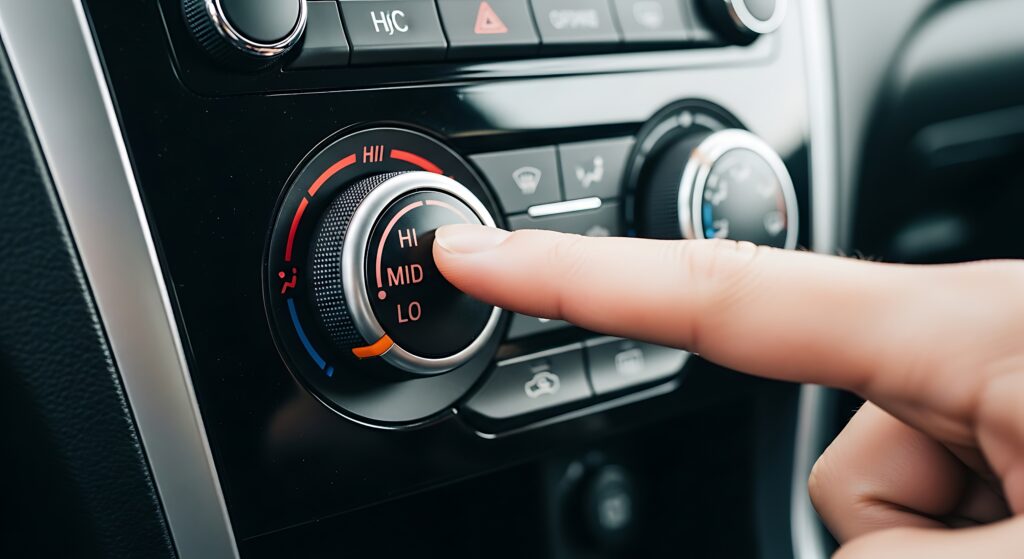
When you turn on your vehicle’s heater, you expect warm air within a few minutes. If you’re getting cold air, weak airflow, strange smells, or no air at all, something in the heating or cooling system may need attention. A car heater that isn’t working can be more than an inconvenience because the climate-control system also plays an important role in keeping your windshield clear during cold or damp conditions. At 10 Degrees Automotive in Corona, we diagnose automotive heating and cooling problems to determine why your system isn’t performing properly. If your car heater has stopped working or isn’t getting warm enough, call 951.414.9423 to schedule an inspection.
Vehicle heating systems involve several components working together. Depending on the symptoms, the problem could be as simple as low coolant or a clogged cabin air filter—or it could involve the thermostat, heater core, blower motor, electrical controls, or another component.
Understanding some of the most common causes can help you recognize when your vehicle needs professional attention.
🌡️ How Does Your Car’s Heater Work?
Most gasoline-powered vehicles produce cabin heat by using heat generated by the engine.
As the engine reaches operating temperature, engine coolant absorbs heat. Some of that heated coolant circulates through a small heat exchanger called the heater core, which is usually located inside or near the dashboard.
The blower motor moves air across the heater core, and the warmed air is directed through the vents into the passenger compartment.
Your climate-control system also uses doors, actuators, sensors, switches, and electronic controls to determine where the air goes and how warm it should be.
Because several systems are involved, a heater problem doesn’t necessarily mean the heater core itself has failed.
💧 1. Low Engine Coolant
One of the first things that may affect heater performance is low coolant.
The heater core needs a supply of hot coolant to produce warm air. If the cooling system is low, there may not be enough coolant circulating through the heater core.
You might notice that the heater blows lukewarm or cold air, or that the temperature changes while driving.
Low coolant can also be a warning sign of a leak.
Possible leak locations include radiator hoses, heater hoses, the radiator, water pump, coolant reservoir, thermostat housing, heater core, and various gaskets or seals.
Simply adding coolant without determining why the level became low may not solve the underlying problem.
🔧 2. A Faulty Thermostat
Your vehicle’s thermostat helps regulate engine operating temperature by controlling coolant circulation.
When the engine is cold, the thermostat generally remains closed so the engine can warm up efficiently. Once the correct operating temperature is reached, it opens to allow coolant to circulate through the radiator.
If a thermostat becomes stuck open, the engine may take too long to warm up or may operate cooler than intended. As a result, the heater may produce air that isn’t as warm as it should be.
You may also notice the engine temperature gauge staying unusually low.
A thermostat can fail in other ways as well, so testing is important before assuming it needs replacement.
♨️ 3. A Clogged Heater Core
The heater core functions somewhat like a miniature radiator.
Hot coolant passes through small internal passages while the blower motor pushes air across the heater core’s fins. If those passages become restricted, coolant flow may be reduced.
A partially clogged heater core can cause poor heating performance even if the engine itself reaches normal operating temperature.
One possible clue is a noticeable temperature difference between the heater hoses entering and leaving the heater core.
Proper diagnosis can help determine whether the heater core is restricted or another cooling system issue is responsible.
🚨 4. A Leaking Heater Core
A heater core can also develop a leak.
Because the heater core is often located inside the dashboard area, a leak can produce symptoms that are different from an ordinary coolant leak under the hood.
Signs of a possible heater core leak can include a sweet coolant smell inside the cabin, unexplained coolant loss, damp carpeting, or a film or fog appearing on the inside of the windshield.
A leaking heater core should be addressed promptly.
Loss of coolant can eventually contribute to engine overheating, while coolant entering the passenger compartment creates an additional problem that needs to be corrected.
💨 5. Blower Motor Failure
What if the heater seems to be producing heat, but no air comes from the vents?
The blower motor may be the problem.
Your blower motor is the electric fan responsible for pushing air through the HVAC system and into the passenger compartment.
When it fails, you may get little or no airflow regardless of whether you select heat or air conditioning.
Sometimes a blower motor stops working completely. In other cases, it may operate intermittently or only at certain speeds.
Diagnosis may involve checking the motor itself as well as the fuse, relay, resistor or control module, wiring, switches, and related electronic controls.
🎛️ 6. Blend Door or Actuator Problems
Modern heating and air conditioning systems use internal doors to control air temperature and direction.
One of these is commonly called the blend door.
The blend door determines how air is routed through or around the heater core to achieve the temperature selected by the driver or passengers.
An electric actuator often moves this door.
If the blend door actuator fails, the door becomes stuck, or another HVAC control problem develops, the system may continue blowing cold air even though hot coolant is flowing through the heater core.
Some vehicles may also produce clicking or tapping sounds from behind the dashboard when an actuator begins failing.
🌬️ 7. A Dirty Cabin Air Filter
A dirty cabin air filter usually doesn’t prevent the heater from producing heat, but it can significantly reduce airflow from the vents.
The cabin air filter traps dust, pollen, dirt, leaves, and other contaminants before they enter the passenger compartment.
As the filter becomes clogged, the blower motor has to move air through an increasingly restricted filter.
You might notice that the air is warm but doesn’t come out of the vents with the force it once did.
Cabin air filter replacement intervals vary by vehicle and driving environment, so consult your owner’s manual and have the filter inspected as part of routine maintenance.
🌀 8. Air Trapped in the Cooling System
Air pockets inside the engine cooling system can interfere with coolant circulation.
This may happen after cooling system repairs, coolant loss, or improper filling procedures.
Because the heater core depends on a steady flow of coolant, trapped air can result in inconsistent cabin heat.
You might notice that the heater temperature changes as engine speed increases or that the heater works intermittently.
Different vehicles have different cooling system bleeding procedures, and some systems require specialized filling equipment to remove trapped air properly.
⚡ 9. Electrical Problems
Today’s automotive climate-control systems rely heavily on electronics.
A problem with a fuse, relay, wiring circuit, switch, sensor, control module, blower motor controller, or actuator can interfere with heater operation.
Automatic climate-control systems can be particularly complex because they may use multiple sensors to monitor cabin temperature, outside temperature, sunlight intensity, and other conditions.
When an electrical fault is suspected, testing the system is much more effective than replacing parts based on symptoms alone.
🌡️ 10. Engine Temperature Problems
Sometimes the heater isn’t the actual source of the problem.
If the engine isn’t reaching its proper operating temperature, the heating system may not have enough heat available to warm the passenger compartment effectively.
On the other hand, if the engine is overheating and the heater suddenly stops producing warm air, low coolant or a circulation problem could be involved.
Pay attention to your vehicle’s temperature gauge.
A heater problem combined with an unusual engine temperature reading deserves prompt attention because the issue may involve the engine cooling system rather than just passenger comfort.
👃 Why Does My Heater Smell Strange?
Different smells can provide clues about what’s happening.
A sweet smell may indicate engine coolant, particularly if you’re also experiencing coolant loss or windshield fogging.
A musty odor may be associated with moisture, debris, or contamination within the HVAC system.
A burning smell requires more immediate attention because it could involve an electrical problem, overheating component, debris near a heat source, or another issue.
Persistent or unusual odors shouldn’t simply be covered up with air fresheners. Identifying the source is the better approach.
🪟 Why Does a Working Heater Matter for Defrosting?
Cabin heat isn’t just about keeping passengers comfortable.
Your vehicle’s HVAC system is essential for maintaining windshield visibility.
The defrost and defog functions direct conditioned air toward the windshield to help remove condensation and frost. If the blower motor doesn’t operate or the HVAC doors can’t direct air properly, windshield clearing can become more difficult.
A heater or blower problem is therefore worth addressing even in a generally warm climate.
Clear visibility is a safety issue regardless of outside temperature.
🔍 How Is a Car Heater Problem Diagnosed?
Because several different problems can produce similar symptoms, an accurate diagnosis starts with understanding exactly what the system is doing.
A technician may check the coolant level and condition, engine operating temperature, thermostat performance, heater hose temperatures, heater core flow, blower motor operation, cabin air filter, HVAC actuators, and electronic controls.
The diagnostic process may also include cooling system pressure testing if a leak is suspected.
For electrical problems, circuit testing or a diagnostic scan may be needed.
The goal is to identify the component actually causing the problem instead of replacing parts unnecessarily.
🛠️ Can Routine Maintenance Help Prevent Heater Problems?
Some heating system failures occur unexpectedly, but proper vehicle maintenance can reduce the risk of certain problems.
Maintaining the cooling system is particularly important because the heater depends on the same coolant that protects your engine from excessive heat.
Using the correct coolant type and mixture, following manufacturer-recommended coolant service intervals, inspecting hoses, repairing leaks promptly, and replacing the cabin air filter when necessary can all support proper HVAC operation.
It’s also wise to occasionally test your heater before colder weather arrives.
Discovering a problem early gives you time to have it diagnosed before you actually need the system.
⚠️ When Should You Have Your Car Heater Inspected?
Don’t wait for a complete heater failure if you’re already noticing changes.
Consider scheduling an inspection if your heater blows cold air after the engine is fully warmed up, takes much longer than usual to produce heat, has weak airflow, works intermittently, or produces unusual noises or smells.
You should also pay close attention to coolant loss, engine overheating, abnormal temperature gauge readings, wet carpeting, or persistent windshield fogging.
These symptoms can indicate a problem involving more than just cabin comfort.
If the engine begins overheating, address the issue immediately rather than continuing to drive and relying on the heater.
🚗 Why Professional Heater Diagnosis Matters
A vehicle heater involves the engine cooling system, HVAC system, electrical circuits, airflow controls, and climate-control electronics.
That means guessing can become expensive.
For example, cold air from the vents could be caused by low coolant, a thermostat problem, restricted heater core flow, an actuator failure, or an electronic control issue.
Professional testing helps narrow down the possibilities and determine which repair is actually necessary.
It also provides an opportunity to inspect the rest of the system for developing issues that could affect reliability.
📞 Car Heater Repair in Corona
If your heater isn’t producing warm air, airflow has become weak, or you’ve noticed unusual smells, noises, coolant loss, or windshield fogging, don’t ignore the symptoms. The cause could involve low coolant, a faulty thermostat, a clogged or leaking heater core, a blower motor problem, a blend door actuator, or another HVAC or cooling system issue. Finding the problem early can help restore cabin comfort while also identifying cooling system problems that could potentially affect your engine.
For professional car heater diagnosis and repair, contact 10 Degrees Automotive in Corona. Our team can inspect your vehicle’s heating, cooling, and climate-control systems to determine why your heater isn’t working properly. Call 951.414.9423 today to schedule your appointment and get your vehicle’s heater working the way it should.